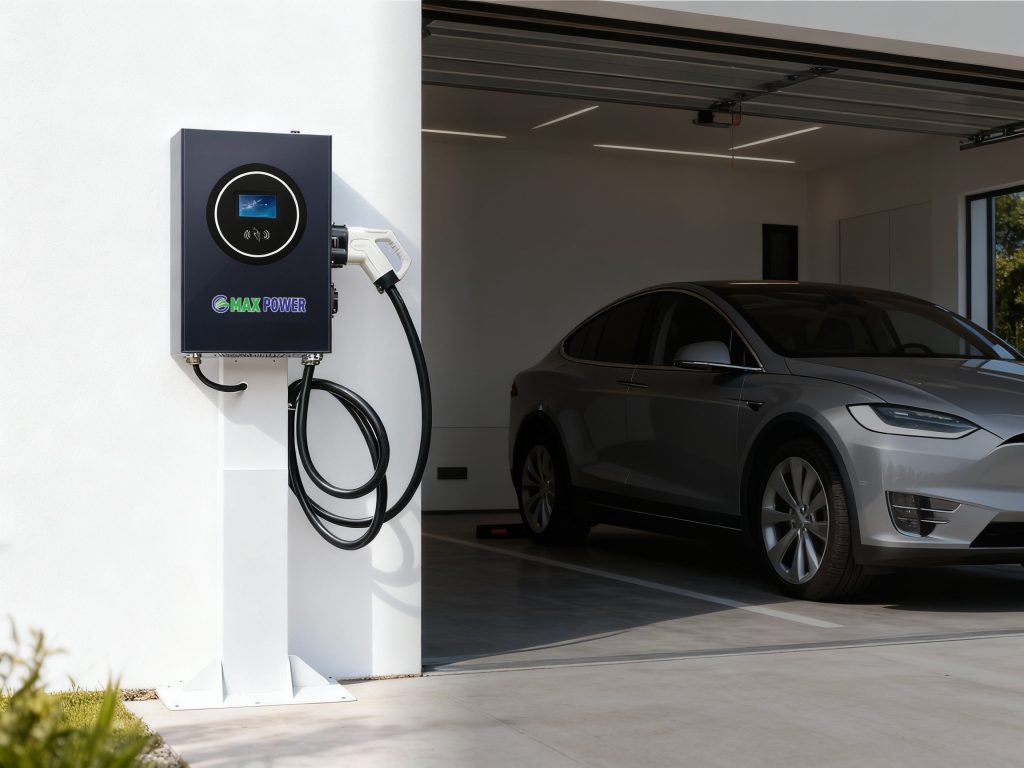
AC charging station—including household-friendly AC EV charger models and commercial-grade ac recharge station setups—has evolved far beyond basic power delivery, integrating smart tech to enhance convenience, efficiency, and safety for electric vehicle (EV) users. These features are critical for wholesalers serving residential communities, commercial parking lots, or fleet operators, as they address key pain points like charging queue management, remote monitoring, and adaptability to diverse EV models. Guangzhou Max Power New Energy Technology Co., Ltd., a leading EV charging equipment manufacturer founded in 2017 (with a 4,000㎡ production base and expertise in power conversion), embeds these smart capabilities into their ac charging station lineup—from the ACQ Series AC EV charger (offering 7KW/11KW/22KW power tiers) to industrial ac recharge station designs. Their focus on user-centric innovation ensures wholesalers can deliver solutions that meet modern EV owners’ needs, making them a trusted bulk partner globally.

Smart Connectivity and Remote Management for AC Charging Station
- App-Based Control for AC EV charger: Modern AC EV charger models (like Max Power’s ACQ Series) feature smartphone app connectivity—enabling users to start/stop charging, monitor progress, and schedule sessions remotely. For example, a homeowner can set their AC EV charger to activate during off-peak hours (when electricity rates are lower) via the app, reducing charging costs by 20–30%. The app also sends real-time notifications (e.g., “Charging complete” or “Fault detected”), eliminating the need for users to check the ac charging station in person. For wholesalers, this feature is a major selling point for residential clients: it aligns with the “smart home” trend and adds convenience that basic chargers lack. Max Power’s app also supports bulk management—property managers can monitor multiple AC EV charger units in a residential complex from a single dashboard, streamlining operations.
- Cloud-Based Diagnostics for Ac Recharge Station: Commercial ac recharge station setups rely on cloud-based diagnostics to minimize downtime—a critical smart feature for high-traffic areas like shopping mall parking lots. Max Power’s ac recharge station connects to a secure cloud platform that tracks key metrics (e.g., charging speed, power consumption, and component health) and alerts maintenance teams to potential issues (e.g., a faulty cable or overheating module) before they cause a complete shutdown. For instance, if a ac recharge station’s power module shows abnormal current spikes, the cloud system sends a notification to the wholesaler’s client, allowing proactive repairs. This reduces downtime by 60% vs. traditional chargers, ensuring ac recharge station remains operational for fleet or public use.

Adaptive Power Management for AC EV charger
- Dynamic Load Balancing for AC Charging Station: AC charging station with dynamic load balancing prevents overloading the electrical grid—especially critical for multi-unit setups (e.g., 10+ AC EV charger units in an office parking lot). Max Power’s system automatically distributes available power across active chargers——if 5 EVs are charging simultaneously, the ac charging station reduces individual power output slightly (e.g., from 11KW to 9KW per unit) instead of tripping a circuit breaker. For example, a commercial ac recharge station with 22KW total capacity can safely charge 4 EVs at 5.5KW each, ensuring no power disruption. This feature is essential for wholesalers serving clients with limited electrical infrastructure, as it eliminates the need for costly grid upgrades.

- Multi-Power Tier Adaptation for AC EV charger: The ability to adjust power output to match EV requirements is a key smart feature of modern AC EV charger. Max Power’s ACQ Series AC EV charger offers 7KW/11KW/22KW tiers in a single, compact chassis (380×1360×320mm)—it automatically detects the EV’s maximum charging capacity and selects the appropriate tier. For instance, a small EV with a 7KW on-board charger will only draw 7KW from the AC EV charger, while a larger EV (like an SUV) can use the full 22KW, reducing charging time by half. This adaptability means wholesalers don’t need to stock multiple charger models—one AC EV charger fits diverse EV types, simplifying inventory management and reducing costs.
Smart Safety Features for AC Charging Station
| Smart Safety Feature | Key Benefit for AC Charging Station | Ideal Application | Max Power Advantage | Wholesaler Value |
|---|---|---|---|---|
| Overcurrent/Overvoltage Protection | Prevents damage to EV battery and charger | Residential AC EV charger, commercial lots | Real-time current monitoring; auto-shutdown | Appeals to safety-focused residential clients |
| IP54-Rated Weather Resistance | Withstands rain, dust, and extreme temps | Outdoor ac recharge station (parking lots) | ACQ Series’ durable casing; -25°C to +50°C range | Caters to commercial outdoor operators |
| Ground Fault Circuit Interrupter (GFCI) | Shuts down charger during electrical leaks | All ac charging station types | Fast 0.1s response time; meets global safety standards | Fits all client segments (residential/commercial) |
User-Centric Smart Design for Ac Recharge Station
- Lightweight and Space-Saving Build for AC EV charger: Modern AC EV charger prioritizes portability and space efficiency—Max Power’s ACQ Series weighs just 15kg (far lighter than traditional 30kg+ chargers) and features a compact design, making it easy to install in tight spaces (e.g., garage corners or small parking spots). For residential clients, this means no heavy lifting during installation; for commercial ac recharge station setups, it allows more units to be placed in limited parking space. The lightweight build also reduces shipping costs for wholesalers—bulk orders of AC EV charger units require less transportation capacity, lowering logistics expenses.
- Altitude Adaptability for Ac Recharge Station: Ac recharge station in high-altitude areas (e.g., mountain resorts or plateau regions) face unique challenges like reduced air cooling efficiency. Max Power’s ac recharge station is engineered to operate reliably at altitudes up to 2,000 meters, with modified cooling systems that compensate for thinner air. This smart adaptation ensures consistent charging performance (no overheating or speed reduction) in areas where basic chargers fail. For wholesalers serving clients in diverse geographic regions, this feature expands market reach—they can cater to high-altitude locations without offering specialized models.
AC Charging Station FAQS
Q1: Can AC EV charger Be Integrated with Solar Power Systems?
A1: Yes—Max Power’s AC EV charger models are compatible with solar power systems, allowing users to charge their EVs with renewable energy. The charger’s smart controller detects solar power input and prioritizes it over grid electricity (when available), reducing reliance on fossil fuels. For example, a homeowner with a 5KW solar panel system can use their AC EV charger to power their EV entirely with solar energy during the day. Wholesalers can highlight this compatibility to eco-conscious clients, as it aligns with global sustainability goals.
Q2: What Is the Difference Between a Residential AC EV charger and Commercial Ac Recharge Station?
A2: Residential AC EV charger (like Max Power’s ACQ Series 7KW/11KW models) is designed for low-to-medium usage (1–2 EVs daily) with features like app scheduling and compact size. Commercial ac recharge station (22KW+ models) is built for high traffic (10+ EVs daily) with cloud management, dynamic load balancing, and multiple charging ports.
Q3: How Long Does It Take to Install a Smart AC Charging Station?
A3: Installation time depends on the type: a residential AC EV charger (like the ACQ Series) takes 1–2 hours for a licensed electrician to set up (thanks to its lightweight design and pre-wired components). A commercial ac recharge station (with multiple units) takes 1–2 days, including electrical wiring and cloud connectivity setup.
Q4: Do Smart AC Charging Station Require Regular Software Updates?
A4: Yes—smart ac charging station relies on software for features like app control and diagnostics, and Max Power provides over-the-air (OTA) updates to add new features or fix bugs. Updates are automatic (users can opt for scheduled times, e.g., midnight) and don’t require manual intervention. For wholesalers, this means AC EV charger and ac recharge station units remain up-to-date without client maintenance, reducing support requests.
Q5: Is the ACQ Series AC EV charger Compatible with All EV Models?
A5: Max Power’s ACQ Series AC EV charger is compatible with 95% of EV models (e.g., Tesla, BYD, Volkswagen) thanks to its universal Type 2 connector and adaptive power tiers. It automatically detects the EV’s charging protocol (e.g., CCS, CHAdeMO) and adjusts accordingly. For rare EV models with unique connectors, Max Power offers optional adapter kits—wholesalers can stock these adapters to ensure full compatibility for all clients.

ACQ Series
7-22KW, IP54, With TUV certification, Support OCPP1.6/2.0, Wall or column mounted

ACO Series
7-22KW, IP54, Support OCPP1.6/2.0,Wall or column mounted

ACP Series
7-22KW, IP54, Support OCPP1.6/2.0, Floor mounted

ACQ Series
7-22KW, IP54, With TUV certification, Support OCPP1.6/2.0, Wall or column mounted

ACO Series
7-22KW, IP54, Support OCPP1.6/2.0,Wall or column mounted

ACP Series
7-22KW, IP54, Support OCPP1.6/2.0, Floor mounted

MC Series
7-60KW, IP43, Accept customization of GB/T/CCS/CHAdeMO/NACS, Portable, Patent design

TC Series
30-80KW, IP54, Support OCPP1.6/2.0, Portable

XC Series
7-40KW, IP43, Support OCPP1.6/2.0, Portable

MC Series
7-60KW, IP43, Accept customization of GB/T/CCS/CHAdeMO/NACS, Portable, Patent design

TC Series
30-80KW, IP54, Support OCPP1.6/2.0, Portable

XC Series
7-40KW, IP43, Support OCPP1.6/2.0, Portable

RC Series
22KW, IP65, Lower noise, Support OCPP1.6/2.0, Wall or column mounted

SC Series
7-40KW, IP54, Support OCPP1.6/2.0, Wall or column mounted

OC Series
7-40KW, IP54, With TUV certification, Support OCPP1.6/2.0, Wall or column mounted

RC Series
22KW, IP65, Lower noise, Support OCPP1.6/2.0, Wall or column mounted

SC Series
7-40KW, IP54, Support OCPP1.6/2.0, Wall or column mounted

OC Series
7-40KW, IP54, With TUV certification, Support OCPP1.6/2.0, Wall or column mounted

HC Series
60-240KW, IP54, Support OCPP1.6/2.0, Floor mounted

VC series
60-160KW, IP54, With TUV certification, Support OCPP1.6/2.0, Super thin, Floor mounted

KC Series 60KW-240KW
60-240KW,IP54,with big advertising screen, support OCPP1.6/2.0,floor mounted

HC Series
60-240KW, IP54, Support OCPP1.6/2.0, Floor mounted

VC series
60-160KW, IP54, With TUV certification, Support OCPP1.6/2.0, Super thin, Floor mounted

KC Series 60KW-240KW
60-240KW,IP54,with big advertising screen, support OCPP1.6/2.0,floor mounted

BCM Series
11KW, IP54, Support OCPP1.6/2.0, Movable

BCM Series
11KW, IP54, Support OCPP1.6/2.0, Movable

BCV series
60KWH60KW, IP54, Support OCPP1.6/2.0, Floor mounted

BCM Series
11KW, IP54, Support OCPP1.6/2.0, Movable

BCH Series
40-60KW, IP54,Support OCPP1.6/2.0, Movable

BCV series
60KWH60KW, IP54, Support OCPP1.6/2.0, Floor mounted
We look forward to hearing from you soon and hope to establish a fruitful
business relationship with your company.