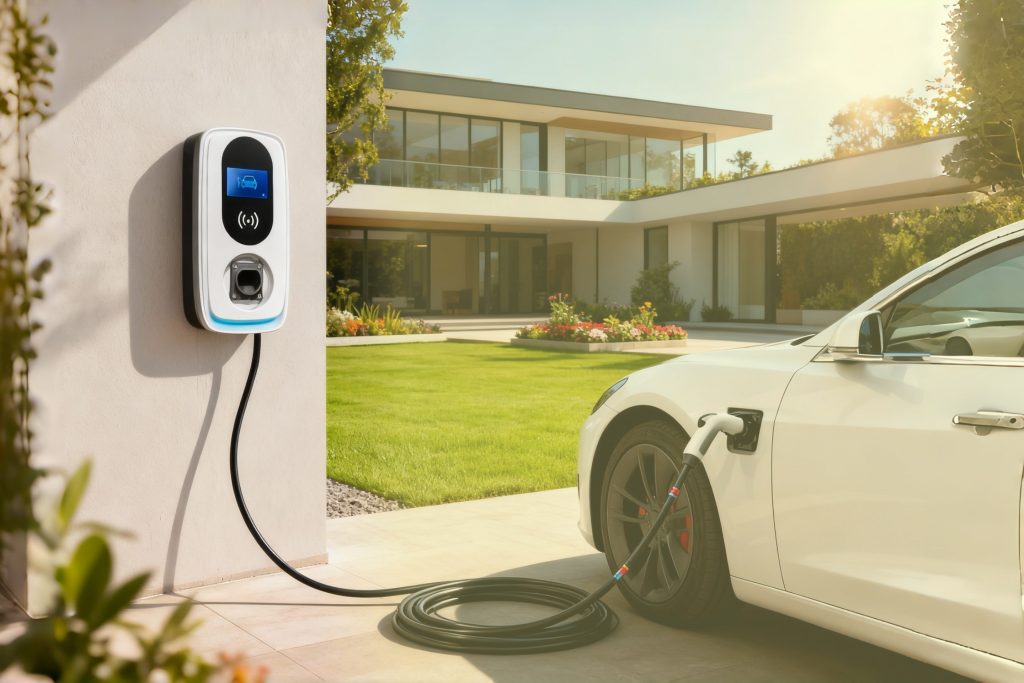
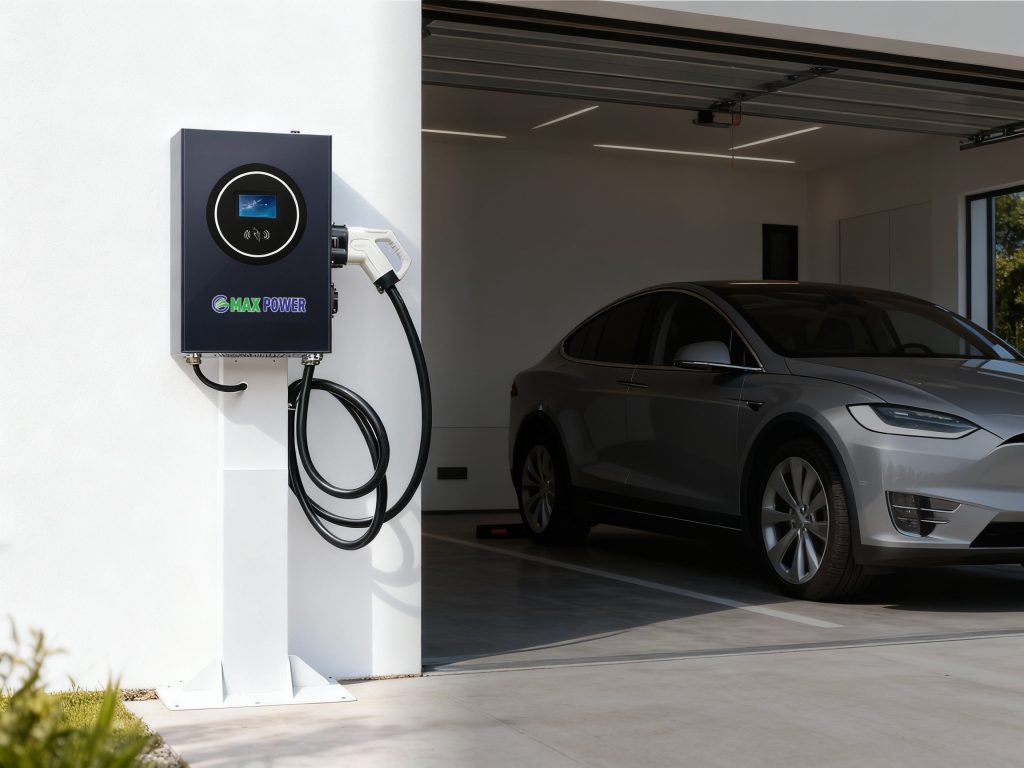
For electric vehicle (EV) owners and operators of dc fast charger locations—from highway rest stops to urban charging hubs—the performance of dc electric vehicle charger units and their dc fast charger voltage settings directly impacts EV battery health. While DC fast chargers are prized for quickly replenishing range, improper dc fast charger voltage can accelerate battery degradation, shortening its lifespan and reducing the EV’s resale value. Guangzhou Max Power New Energy Technology Co., Ltd., a leader in charging station management software (which uses big data and real-time monitoring to track voltage, current, and power parameters), understands that wholesalers and their clients (charging network operators, fleet managers) need dc electric vehicle charger solutions that balance speed and battery protection. While Max Power’s core expertise lies in software that optimizes charger operation—ensuring dc fast charger voltage aligns with EV battery requirements—it also recognizes that integrating this software with voltage-smart chargers is essential for preserving battery longevity. This article explores how dc fast charger voltage affects EV batteries, best practices for voltage management, and the role of intelligent software in mitigating degradation, helping wholesalers source solutions that meet the needs of both charging speed and battery health.

How DC Fast Charger Voltage Influences Battery Degradation
- Voltage Limits and Battery Chemistry: EV batteries (typically lithium-ion) have strict voltage thresholds—exceeding these limits causes irreversible damage to cell structures. For example, a standard 400V EV battery has a maximum safe charging voltage of ~4.2V per cell; if a dc electric vehicle charger supplies voltage beyond this (e.g., due to a malfunction or misconfiguration), it can lead to lithium plating (where lithium ions deposit on cell anodes instead of embedding) or thermal runaway. Even slightly elevated dc fast charger voltage over time can reduce battery capacity by 10-20% within 2-3 years. On the other hand, voltage that’s too low (below the battery’s minimum charging threshold) leads to incomplete charging and increased cycle count—another factor in degradation. Wholesalers should note that modern dc electric vehicle charger units are designed to communicate with EVs via the CCS or CHAdeMO protocol, automatically adjusting dc fast charger voltage to match the battery’s specifications—but this requires both charger and software to be properly calibrated.
- Voltage Stability to Avoid Stress Spikes: Beyond absolute voltage levels, stability matters—fluctuating dc fast charger voltage (e.g., sudden spikes or drops during charging) puts additional stress on batteries. For example, if a dc fast charger at a busy dc fast charger location experiences power grid fluctuations and momentarily increases voltage by 5%, it can trigger stress responses in the battery’s management system (BMS), leading to reduced charging efficiency and long-term damage. Guangzhou Max Power’s management software addresses this by monitoring dc fast charger voltage in real time, alerting operators to instability and automatically adjusting charger output to maintain a steady flow—critical for high-traffic dc fast charger locations where grid demand is variable.
Voltage Compatibility Between DC Electric Vehicle Charger and EV Batteries
| Battery Type | Typical Voltage Range | Optimal DC Fast Charger Voltage | Wholesale Value for Clients |
|---|---|---|---|
| 400V EV Battery (Entry/Mid-Size EVs) | 350V-420V | 380V-400V (adjusts based on charge level) | Compatible with most standard dc electric vehicle charger units; ideal for urban dc fast charger locations serving daily commuters. |
| 800V EV Battery (Premium/High-Performance EVs) | 700V-850V | 750V-800V (requires high-voltage chargers) | Requires specialized dc electric vehicle charger; suitable for highway dc fast charger locations serving long-distance travelers. |
| Low-Capacity Battery (Micro EVs) | 200V-300V | 220V-250V (lower voltage to prevent overstress) | Needs voltage-adjustable chargers; popular for residential or small commercial dc fast charger locations. |
Intelligent Voltage Management via Software for DC Fast Charger Locations
- Real-Time Voltage Monitoring and Adjustment: The key to protecting batteries at dc fast charger locations is intelligent software that syncs with dc electric vehicle charger units to monitor and adjust dc fast charger voltage. Guangzhou Max Power’s management software does this by: 1) Receiving battery voltage requirements from the EV’s BMS (via the charging protocol); 2) Setting the dc fast charger voltage to match these requirements (e.g., 400V for a 400V battery, 800V for a high-voltage model); 3) Continuously tracking voltage output during charging and correcting deviations (e.g., reducing voltage if the battery nears its maximum threshold). For example, when an EV’s battery reaches 80% capacity (where degradation risk increases), the software automatically lowers dc fast charger voltage to a trickle charge level, preserving cell health. Wholesalers can highlight this feature to clients operating dc fast charger locations, as it eliminates the need for manual voltage checks and ensures consistent protection across all charging sessions.
- Voltage-Based Charging Profiles for Different Scenarios: Not all charging sessions are the same—some EV owners need a full fast charge (e.g., long road trips), while others can accept slower charging (e.g., overnight stays at a hotel dc fast charger location). Max Power’s software allows dc fast charger locations to create voltage-based charging profiles: a “Quick Charge” profile uses maximum safe dc fast charger voltage for 0-80% capacity (then reduces voltage), while a “Battery-Saver” profile uses slightly lower voltage throughout to minimize stress. This flexibility lets operators cater to different user needs while protecting batteries—critical for dc fast charger locations serving diverse clientele (e.g., fleet vehicles, leisure travelers).
Best Practices for DC Fast Charger Voltage Management at Locations
- Regular Charger Calibration to Maintain Voltage Accuracy: Over time, dc electric vehicle charger units can drift from their optimal voltage settings (due to wear, temperature changes, or grid fluctuations). To prevent this, dc fast charger locations should calibrate chargers every 3-6 months—verifying that dc fast charger voltage output matches the set parameters. Guangzhou Max Power’s software simplifies this by generating calibration reports (comparing intended vs. actual voltage) and alerting operators when calibration is needed. Wholesalers can offer calibration services or kits as add-ons to dc electric vehicle charger sales, adding value for clients and ensuring long-term voltage accuracy.
- Training for Staff on Voltage Safety Protocols: For dc fast charger locations with on-site staff (e.g., highway service stations), training on dc fast charger voltage safety is essential. Staff should know how to: 1) Recognize signs of voltage instability (e.g., error messages on chargers, EVs disconnecting unexpectedly); 2) Use the management software to check real-time voltage data; 3) Shut down a charger if voltage exceeds safe limits. This human oversight complements software monitoring, reducing the risk of voltage-related battery damage at busy dc fast charger locations.
DC Electric Vehicle Charger FAQS
Q1: Do All DC Electric Vehicle Charger Units Support Variable Voltage for Different EV Batteries?
A1: Most modern dc electric vehicle charger units (manufactured after 2020) support variable dc fast charger voltage (e.g., 200V-850V) and automatically adjust to match EV battery requirements via the CCS/CHAdeMO protocol. Older chargers (pre-2020) may be limited to fixed voltages (e.g., 400V only), making them incompatible with 800V EVs. Wholesalers should advise clients to prioritize variable-voltage chargers when investing in new dc fast charger locations, as they future-proof the site for next-gen EVs. Guangzhou Max Power’s software enhances compatibility by confirming voltage matching before charging begins, preventing mismatches that could damage batteries.
Q2: Can High DC Fast Charger Voltage at Public Locations Void an EV’s Battery Warranty?
A2: In most cases, no—if the dc electric vehicle charger at a dc fast charger location is properly calibrated and communicates with the EV’s BMS (automatically adjusting dc fast charger voltage), it won’t void the warranty. EV manufacturers design batteries to handle standard fast-charging voltages (as long as the charger follows protocol). However, if a charger supplies unregulated voltage (e.g., due to a malfunction or lack of software monitoring) and damages the battery, the manufacturer may deny the warranty claim. Wholesalers can reassure clients that using voltage-smart chargers with intelligent software (like Max Power’s) minimizes this risk, protecting both EV owners and dc fast charger location operators.
Q3: How Does Temperature Affect DC Fast Charger Voltage and Battery Health?
A3: Temperature impacts both dc fast charger voltage stability and battery tolerance. In extreme cold (below -10℃), batteries have lower voltage acceptance—so dc fast charger voltage should be reduced to avoid lithium plating. In extreme heat (above 40℃), high voltage can increase thermal runaway risk—so chargers should lower voltage and slow charging speed. Guangzhou Max Power’s software addresses this by integrating temperature data (from charger or EV sensors) into voltage adjustments: for example, at a hot summer dc fast charger location, the software automatically caps dc fast charger voltage at 90% of the battery’s maximum threshold. Wholesalers should highlight this temperature adaptation feature to clients in regions with extreme weather.
Q4: Is There a Way to Track Battery Degradation Caused by DC Fast Charger Voltage at My Location?
A4: Yes—Guangzhou Max Power’s management software can integrate with EV BMS data (with user consent) to track battery capacity over time, correlating it with dc fast charger voltage history at your dc fast charger location. For example, if a fleet of EVs using your chargers shows a 5% capacity drop in 6 months, the software can analyze voltage logs to see if fluctuations or over-voltage events contributed. This data helps dc fast charger location operators optimize voltage settings and demonstrate to users that their chargers prioritize battery health. Wholesalers can position this data-tracking feature as a key selling point for clientele focused on long-term user trust.
Q5: What Support Does Guangzhou Max Power Offer for Voltage Management in DC Electric Vehicle Charger?
A5: Guangzhou Max Power provides end-to-end support for voltage management: 1) Software integration—pre-configuring dc electric vehicle charger units to sync with Max Power’s platform for real-time voltage monitoring and adjustment; 2) Training—virtual sessions for dc fast charger location operators on voltage calibration, safety protocols, and software use; 3) Technical support—24/7 assistance for resolving voltage-related issues (e.g., instability, mismatches); 4) Reporting tools—customizable dashboards showing dc fast charger voltage trends, calibration status, and battery health correlations. To explore how our solutions enhance voltage management for your dc fast charger locations or dc electric vehicle charger sales, visit our company webpage today!
Please leave to us and we will be in touch within 24hours.