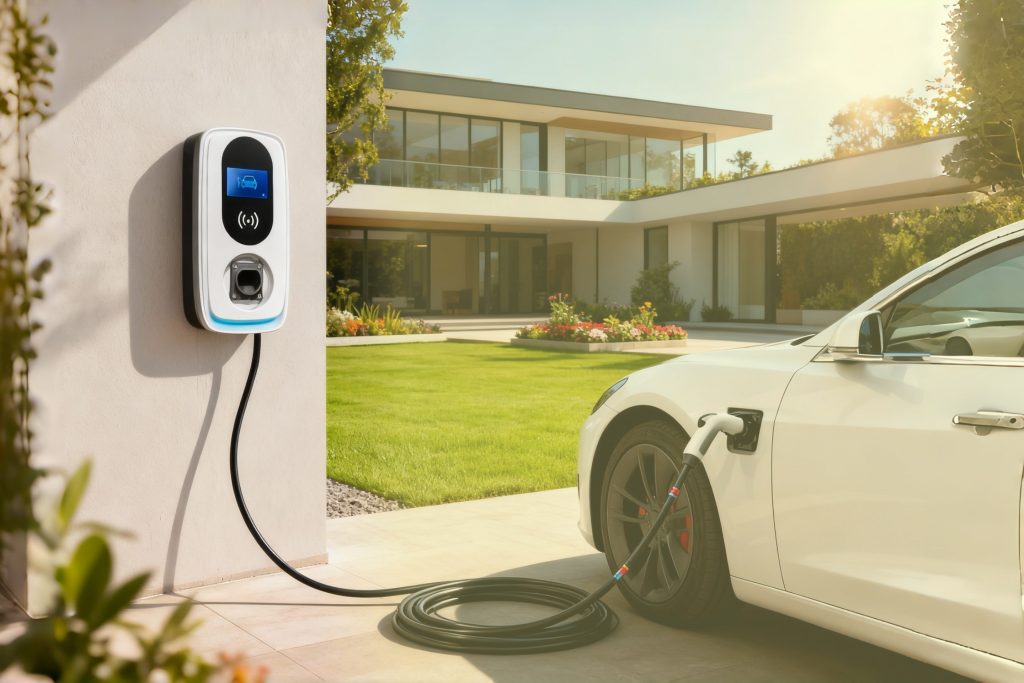
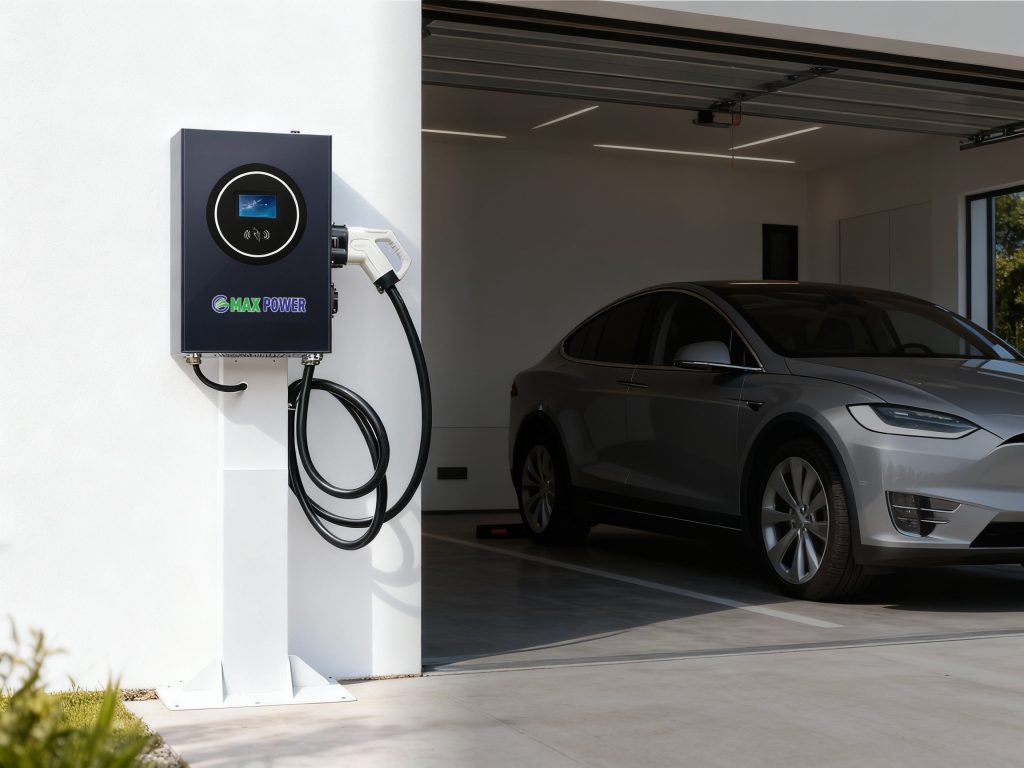
As the global shift toward electric mobility accelerates, public solar charging stations are poised to become the cornerstone of sustainable urban infrastructure. Blending clean solar energy with convenient charging services, these facilities not only address the range anxiety of EV users but also align with global carbon neutrality goals, unlocking enormous market potential for wholesale partners. Solar electric car charging station and solar powered ev charging station are increasingly becoming the preferred choices for public infrastructure projects, thanks to their low operational costs and environmental benefits. Guangzhou Max Power New Energy Technology Co., Ltd., a leading provider of charging solutions, enhances the value of these facilities with its professional charging station management software—an intelligent hub connecting users and charging equipment—laying a solid foundation for wholesale partners to tap into the booming public solar charging stations market.

Key Trends Shaping The Future Of Public Solar Charging Stations
- Smart Grid Integration: The future of public solar charging stations lies in seamless integration with smart grids. These stations will act as distributed energy nodes, leveraging bidirectional charging technology to feed excess solar energy back to the grid during off-peak hours. For wholesale partners, supplying solar powered ev charging station with smart grid compatibility means catering to the core needs of municipal and utility clients, who prioritize grid stability and energy efficiency.
- High-Power And Fast-Charging Upgrade: With the proliferation of high-capacity EV batteries, public solar electric car charging station are evolving toward high-power fast-charging. Equipped with advanced solar energy storage systems, these stations can deliver rapid charging without overloading the grid. This trend creates huge opportunities for wholesale partners to supply upgraded facilities to highway rest areas, urban transit hubs, and commercial districts—key public charging scenarios.
- Intelligent User Experience Optimization: Future public solar charging stations will focus on enhancing user convenience through intelligent technologies. Features like real-time occupancy monitoring, reservation systems, and contactless payment will become standard, all supported by integrated management platforms. Max Power’s intelligent management software, with its big data and scheduling capabilities, is perfectly positioned to power these user-centric upgrades, adding value to wholesale offerings.
- Modular And Scalable Design: To adapt to varying public space constraints and charging demand, modular design will dominate future solar powered ev charging station. Wholesale partners can offer customizable solutions—adjusting the number of charging ports, solar panel capacity, and storage size—to meet the specific needs of different public projects, from small community stations to large-scale transit hubs.

Comparison Of Traditional Public Charging Stations And Solar Powered Ev Charging Station
When evaluating a home dc ev charger or a commercial solution, a detailed look at technical parameters and market offerings is crucial. Key specifications like power output (kW), efficiency, power factor, charging protocols (CCS, CHAdeMO, GB/T), and communication standards (OCPP) directly influence charging speed, operational costs, and compatibility. Below, we present a comparative overview of typical DC EV charger parameters in the market to highlight the competitive edge of advanced solutions.
General Market DC EV Charger Parameters Comparison
| Charging Station Type | Operational Sustainability | Long-Term Cost Efficiency | Wholesale Market Potential | Solar Powered Ev Charging Station | Renewable solar energy supply, low carbon emissions, reduced reliance on fossil fuels, aligned with global sustainability policies | Minimal electricity procurement costs, stable long-term operational expenses, energy storage systems optimize energy use and reduce peak-load fees | High demand from municipal governments, transit authorities, and public facility managers; strong policy support drives market growth; ideal for wholesale bulk orders |
|---|---|---|---|
| Traditional Public Charging Stations | Dependent on grid electricity (often fossil fuel-derived), high carbon footprint, vulnerable to energy policy changes | High long-term electricity costs, susceptible to grid price fluctuations, limited cost-saving potential | Declining market competitiveness, reduced appeal to eco-conscious public clients, shrinking wholesale opportunities amid green transition |
Our Core Advantages In Public Solar Charging Stations
Guangzhou Max Power New Energy Technology Co., Ltd. stands out in the public solar charging stations sector with its integrated technology and wholesale-oriented solutions:
- Integrated Intelligent Management System: Max Power’s proprietary charging station management software is a game-changer for public solar electric car charging station. It uses big data and intelligent scheduling to optimize energy distribution, ensuring efficient use of solar power. The software monitors real-time parameters of charging piles (online status, power, current, voltage) remotely, supports remote control and automatic fault reporting—greatly reducing operational and maintenance costs for wholesale partners’ public-sector clients.
- Customized Public-Scenario Solutions: The company offers tailored solar powered ev charging station solutions for diverse public spaces. For busy urban plazas, compact and high-efficiency stations are designed; for highway service areas, high-power fast-charging systems with large-capacity solar storage are provided. This customization capability enables wholesale partners to meet the unique needs of different public projects, enhancing their market competitiveness.
- Reliable Quality And Comprehensive Support: Max Power’s public solar charging stations undergo rigorous quality testing to withstand heavy public use and harsh environmental conditions. For wholesale partners, the company provides end-to-end support—from pre-sales technical consultation and project design to after-sales installation guidance and software updates. This full-service model reduces wholesale partners’ operational risks and strengthens long-term cooperation trust.
Wholesale Advantages Of Max Power Solar Charging Stations
For wholesale partners focusing on the public solar charging stations market, Guangzhou Max Power New Energy Technology Co., Ltd. offers unrivaled advantages: the company’s product portfolio covers solar electric car charging station and solar powered ev charging station for all public scenarios, meeting bulk order needs; the integrated intelligent management software adds core value to products, making them more attractive to public clients who prioritize operational efficiency; with strong R&D and production capabilities, the company ensures stable supply and competitive pricing, helping wholesale partners control procurement costs and expand profit margins. Backed by years of industry experience, Max Power understands the wholesale business model and can flexibly adjust cooperation terms to support partners’ market expansion. To explore our full range of public solar charging stations and wholesale cooperation policies, we invite you to visit our company website.
Solar Charging Stations FAQs
Q1: What Is The Minimum Order Quantity For Max Power Solar Charging Stations Wholesale?
A1: The minimum order quantity (MOQ) for our public solar charging stations (including solar electric car charging station and solar powered ev charging station) is 15 units for wholesale. For long-term strategic partners or large-scale public infrastructure projects, we can adjust the MOQ appropriately based on cooperation scale and project requirements to support your business development.
Q2: Can We Customize The Solar Panel Capacity For Solar Powered Ev Charging Station?
A2: Absolutely. We offer fully customizable solar powered ev charging station solutions for wholesale partners. Our R&D team will adjust solar panel capacity, energy storage configuration, and charging port quantity according to your clients’ specific needs—such as local sunlight conditions, daily charging volume, and site space constraints. This customization ensures the stations operate efficiently in different public scenarios, enhancing your competitiveness in the local market.
Q3: How Does Max Power’s Management Software Support Public Solar Charging Stations?
A3: Our professional management software is specially optimized for public solar charging stations. It realizes intelligent scheduling of solar energy and grid power, monitors real-time operational parameters of all charging piles, and supports remote control and automatic fault alerts. For public clients, this software optimizes site layout and investment strategies, while for wholesale partners, it adds high-value technical support that differentiates your offerings from competitors.
Q4: What Is The Delivery Cycle For Wholesale Orders Of Solar Electric Car Charging Station?
A4: For standard solar electric car charging station wholesale orders, the delivery cycle is 20-30 working days. For customized orders (such as special solar panel configurations or software function adjustments), the cycle is 30-40 working days. We have a mature global supply chain and large-scale production base to ensure on-time delivery, even for bulk wholesale orders.
Q5: Do You Provide Technical Training For Wholesale Partners Of Solar Charging Stations?
A5: Yes, we provide comprehensive technical training for all solar charging stations wholesale partners. The training covers product installation, operational maintenance, software use, and troubleshooting. We offer both online courses and on-site training sessions (for large orders) to ensure your team masters the necessary skills to serve your clients effectively. Additionally, our after-sales team provides 24/7 technical support to address any issues during project deployment.