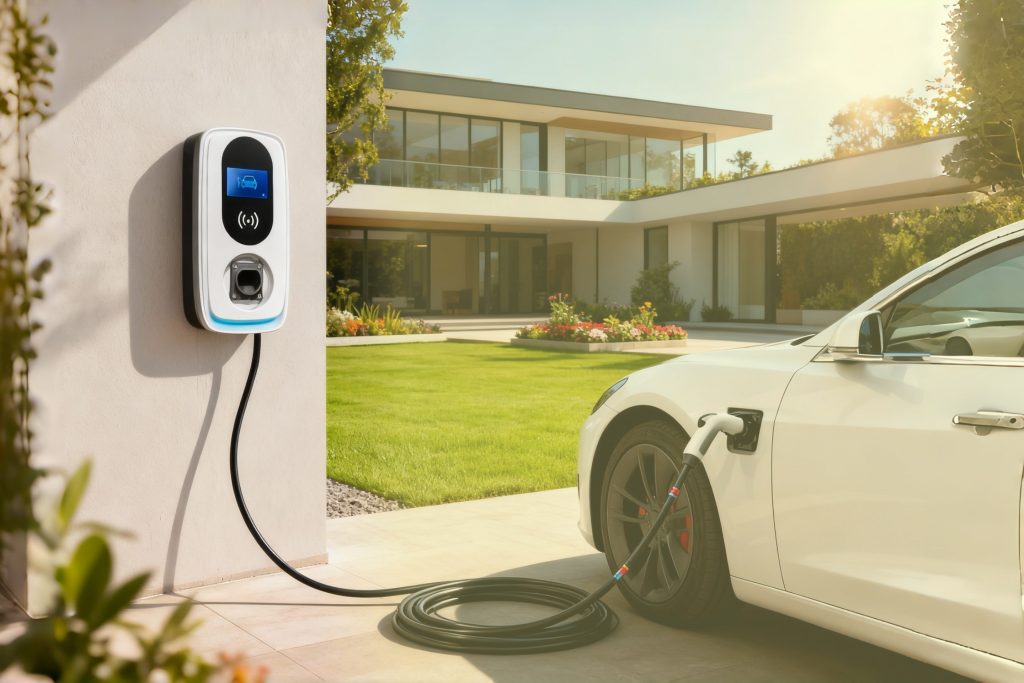
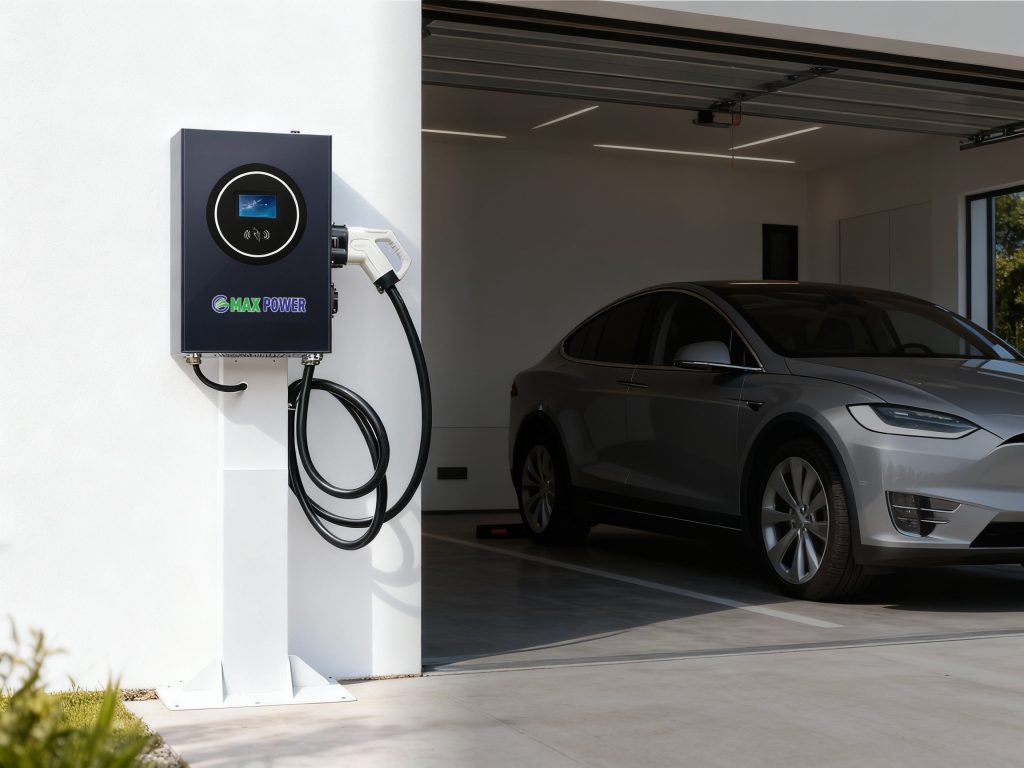
DC fast charger locations—equipped with high-performance dc electric vehicle charger models and optimized dc fast charger voltage configurations—are rapidly multiplying globally, addressing a key barrier to EV adoption: long charging times. Unlike AC chargers (suited for overnight or slow charging), DC fast chargers deliver power directly to EV batteries, cutting charging time from hours to minutes—critical for road trips, fleet operations, and urban commuters. For wholesalers serving public transit agencies, highway authorities, or commercial parking operators, partnering with a manufacturer that produces reliable, scalable DC fast charging solutions is essential. Guangzhou Max Power New Energy Technology Co., Ltd., a leading EV charger manufacturer founded in 2017 (with a 4,000 m² production base and expertise in power conversion), supports this expansion with their SC Series dc electric vehicle charger—featuring patented airflow isolation, 95% efficiency, and DC 7-40KW power output ranges. Their focus on industrial-grade resilience ensures dc fast charger locations can handle high traffic and harsh conditions, making them a trusted bulk partner for wholesalers globally.

Key Drivers Behind the Growth of DC Fast Charger Locations
- Surge in EV Adoption and Policy Support for DC Electric Vehicle Charger: The global rise in EV sales (projected to reach 35% of new car sales by 2030) is the primary driver of dc fast charger locations expansion. Governments are accelerating this growth with incentives—e.g., the U.S. Inflation Reduction Act offers tax credits for public DC charger installations, while the EU’s Green Deal mandates 1 million public chargers by 2030. These policies create massive demand for dc electric vehicle charger bulk orders, as cities and highway operators rush to meet targets. Max Power’s SC Series dc electric vehicle charger is well-positioned for this surge: its ultra-slim profile (545×380×170 mm to 721×475×232 mm) fits in tight urban spaces, while its 95% efficiency reduces operational costs for public operators.
- Consumer Demand for Fast Charging Convenience for DC Fast Charger Locations: EV owners increasingly prioritize fast charging when choosing where to travel or live—making dc fast charger locations a must-have for businesses and communities. A 2024 survey found 78% of EV drivers would avoid areas with limited fast charging, pushing retailers, hotels, and highway rest stops to install dc electric vehicle charger units. Max Power’s SC Series addresses user needs with flexible dc fast charger voltage compatibility (supporting 400V and 900V EV architectures), ensuring it works with both current and next-gen EV models. For example, a highway dc fast charger location equipped with Max Power’s 40 kW model can charge a mid-size EV from 20% to 80% in 30 minutes—meeting the “quick pit stop” expectation of drivers.
Regional Trends in DC Fast Charger Locations Expansion
- Urban vs. Highway DC Fast Charger Locations Deployment: DC fast charger locations expansion follows distinct regional patterns, with urban areas focusing on dense, small-footprint installations and highways prioritizing high-power, multi-port setups. In cities like Tokyo and Berlin, dc electric vehicle charger units (like Max Power’s slim SC Series) are installed in parking garages, shopping mall lots, and street-side spots—catering to daily commuters. On highways (e.g., the U.S. Interstate system or Europe’s Autobahn), dc fast charger locations feature 10+ chargers per site, with dc fast charger voltage optimized for long-distance EVs (800V for faster charging). For example, a U.S. highway site using Max Power’s 40 kW DC electric vehicle charger can serve 4 EVs simultaneously, with each charging in under 40 minutes.
- Emerging Markets vs. Mature Markets for DC Electric Vehicle Charger: Mature markets (North America, Europe, China) lead in dc fast charger location density, but emerging markets (India, Southeast Asia, Latin America) are growing rapidly—driven by low-cost, scalable solutions. In India, for instance, the government’s FAME-II scheme subsidizes dc electric vehicle charger installations along national highways, with a focus on affordable, reliable models like Max Power’s 7-20KW SC Series. Mature markets, meanwhile, are upgrading to higher-power chargers (40 kW+) to support premium EVs. This regional divide creates opportunities for wholesalers: they can offer entry-level dc electric vehicle chargers to emerging markets and high-performance models to mature ones, all from a single manufacturer (Max Power), simplifying supply chain management.
DC Electric Vehicle Charger Technical Adaptations for Global Expansion
| Technical Feature | Key Role in DC Fast Charger Locations | Ideal Regional Application | Max Power SC Series Advantage | Wholesaler Value |
|---|---|---|---|---|
| Wide DC Fast Charger Voltage Range | Compatibility with 400V/900V EVs | Global (mature/emerging markets) | Supports both voltage architectures; no model swap | One charger fits global EV fleets |
| Patented Airflow Isolation | Prevents overheating in high-traffic sites | Hot climates (Southeast Asia, Middle East) | Maintains 95% efficiency at 50°C+; reduces downtime | Caters to harsh environmental conditions |
| Ultra-Slim Profile | Fits tight urban spaces | Dense cities (Tokyo, Mumbai, Berlin) | 545×380×170mm size; easy wall/floor mounting | Appeals to urban parking operators |
| 7-40KW Power Scalability | Matches local demand (low/high traffic) | Emerging (7-20 kW) vs. mature (20-40KW) | scalable power without design changes | Flexible inventory for diverse client needs |
Challenges and Solutions for Scaling DC Fast Charger Locations
- Grid Infrastructure Limitations for DC Electric Vehicle Charger: One of the biggest barriers to dc fast charger location expansion is insufficient grid capacity—especially in rural or emerging areas. Max Power addresses this with their SC Series dc electric vehicle charger, which features load management technology: it adjusts power output based on grid availability, avoiding overloads. For example, a remote dc fast charger location with limited grid capacity can use a 20 kW SC charger that reduces to 10 kW during peak hours, ensuring reliable operation without grid upgrades.
- Maintenance and Durability for DC Fast Charger Locations: Public dc fast charger locations face heavy use (100+ charging sessions daily) and harsh conditions (rain, dust, extreme temperatures), requiring durable, low-maintenance chargers. Max Power’s SC Series dc electric vehicle charger meets this need with an IP54-rated casing (resistant to dust and water) and industrial-grade components—reducing maintenance frequency by 60% vs. consumer-grade chargers. The company also offers remote diagnostics via cloud connectivity, allowing wholesalers’ clients to monitor and fix issues without on-site visits.
DC Fast Charger Locations FAQs
Q1: Can DC Electric Vehicle Chargers Be Integrated with Renewable Energy for DC Fast Charger Locations?
A1: Yes—Max Power’s dc electric vehicle charger is compatible with solar or wind energy systems, enabling dc fast charger locations to operate off-grid or reduce grid reliance. The SC Series features a smart controller that prioritizes renewable energy input, switching to grid power only when needed. For example, highway dc fast charger locations in Australia can use solar panels to power 70% of charging sessions, lowering operational costs.
Q2: What Is the Typical Installation Time for a DC Fast Charger Location Site?
A2: Installation time depends on site complexity: a single dc electric vehicle charger (like Max Power’s 7KW SC Series) takes 1–2 days to install (including electrical wiring and testing). A multi-unit dc fast charger location (4+ chargers) takes 3–5 days, assuming grid infrastructure is in place. Max Power’s pre-wired design and slim profile speed up installation—wholesalers can inform clients that sites can be operational in under a week, minimizing disruption to businesses or highways.
Q3: Are DC electric vehicle chargers compatible with all EV models globally?
A3: Max Power’s dc electric vehicle charger supports all major EV models via universal connectors (CCS, CHAdeMO, Type 2)—critical for dc fast charger locations serving diverse users. The SC Series also adapts to dc fast charger voltage requirements (400V/800V), ensuring compatibility with both older and new EVs. For example, a dc fast charger location in Europe can charge a Tesla (CCS, 400V) and a Porsche Taycan (800V) using the same SC charger—no adapter needed.
Q4:How Does DC Fast Charger Voltage Affect Charging Speed?
A4: Dc fast charger voltage directly impacts speed: 800V systems charge EVs 2–3x faster than 400V ones (e.g., 20% to 80% in 15 minutes vs. 30 minutes). Max Power’s SC Series supports both voltages, letting dc fast charger locations cater to all EVs. For wholesalers, this means clients don’t need to replace chargers as EVs shift to 800V architectures—extending the lifespan of their dc fast charger locations investment and reducing long-term costs.
Q5: What Maintenance Is Required for DC Electric Vehicle Chargers in Public Locations?
A5: Max Power’s dc electric vehicle charger requires minimal maintenance: monthly visual checks (for cable damage or debris), quarterly software updates (via OTA), and annual component inspections. The SC Series’ airflow isolation and IP54 rating reduce the need for frequent servicing—most public dc fast charger locations need only 2–3 maintenance visits per year.