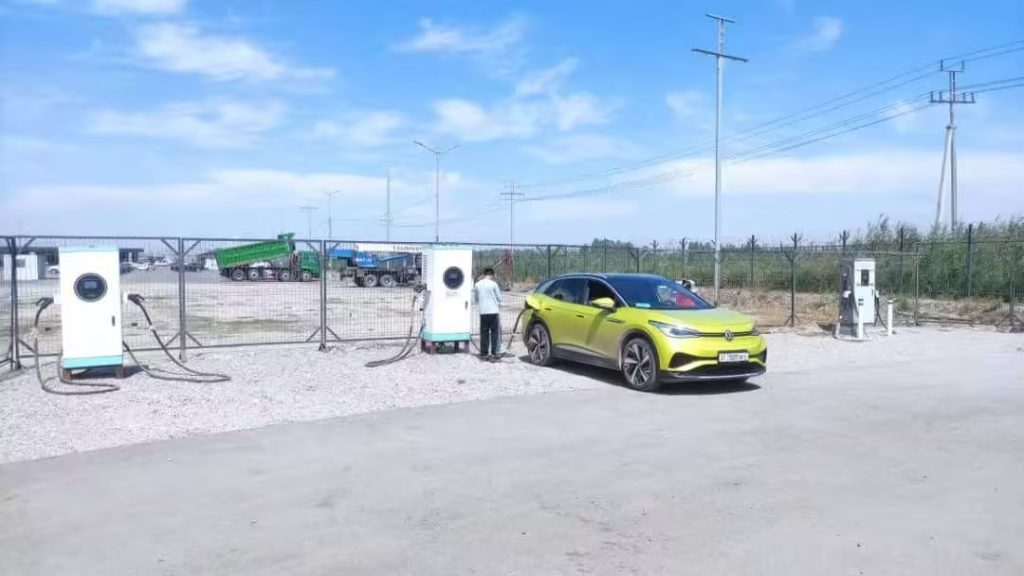
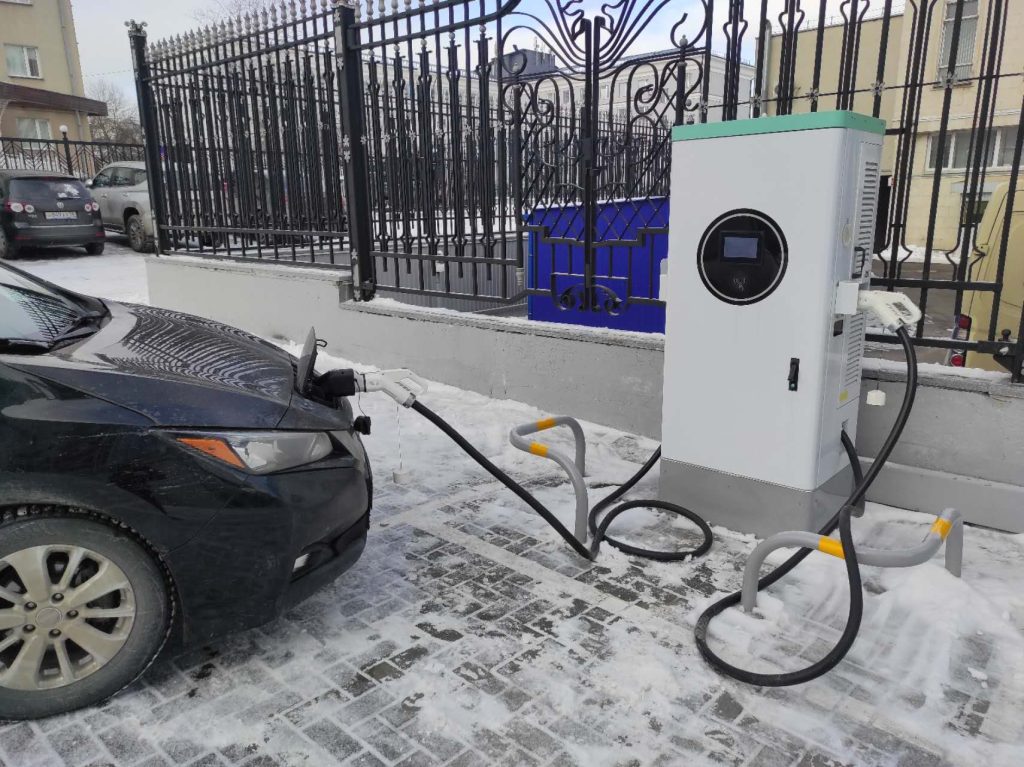
The Challenge
A large commercial charging station in Thailand faced a familiar problem in dense urban markets: its core customers were taxi fleets operating on tight schedules. For a taxi driver, every minute plugged in is a minute not earning fares. The station needed to serve a high volume of vehicles during short driver breaks — typically 20 to 40 minutes — without forcing cars to queue or share power inefficiently.
Compounding the difficulty, the site was semi-outdoor and publicly accessible. High-frequency use, weather exposure, and the inevitable bumps from vehicles and equipment meant that any charger deployed there had to survive physical and environmental stress that a controlled depot would never encounter.
The Max Power Solution
The operator deployed Max Power 160kW DC dual-gun chargers configured for the specific demands of taxi fleet turnover:
- 160kW dual-gun output — two vehicles charge simultaneously, each receiving substantial power. When one gun is idle, the other draws the full rated capacity through dynamic power sharing.
- IP54 ingress protection + IK10 impact resistance — IP54 shields against dust and water spray common in semi-outdoor Thai conditions; IK10 withstands impacts up to 20 joules, roughly a 5 kg object dropped from 40 cm, protecting against trolley collisions and accidental knocks.
- OCPP 1.6J connectivity — integrated directly into the operator’s existing backend with no vendor lock-in, enabling remote start/stop, session pricing, fault alerts, and firmware updates from a single dashboard.
The dual-gun architecture was the decisive factor. Instead of building twice the number of single-gun posts, the station installed fewer units that could serve two cars at once — lowering capital outlay while raising effective bay throughput.

The Results
The deployment transformed how the station served its taxi customers:
- Higher vehicle rotation — drivers returned to service faster because two cars per unit were charged in parallel rather than sequentially.
- Reduced downtime risk — IP54+IK10 protection minimized enclosure damage and weather-related faults, keeping units online during monsoon seasons.
- Operator-controlled operations — OCPP 1.6J gave the station manager full visibility and control without being tied to a proprietary system, protecting long-term flexibility.
While exact utilization figures are operator-confidential, the configuration directly addressed the two variables that matter most to a taxi hub: time per charge and uptime of the charger itself.
Key Takeaways for Fleet Operators
1.Power follows the vehicle. Taxi fleets with short dwell times benefit most from 160kW dual-gun units that prioritize rapid turnover over maximum single-vehicle speed.
2.Protection grades are a TCO lever. IP54+IK10 is not a marketing checkbox — in public, semi-outdoor environments it directly reduces repair frequency and extends service life.
3.Open protocols protect your investment. OCPP 1.6J ensures your charging hardware never becomes stranded by a single software vendor.
Related Resources
→ Read the companion deployment: [Costa Rica Municipal Bus Depot – 240kW]
→ Plan your own site with the [Commercial Charging Station Playbook]
Ready to Build Your Taxi Charging Hub?
Max Power’s 160kW dual-gun DC chargers are engineered for exactly this scenario — high rotation, harsh environments, and operator-led management. Contact us via email now, and our team of experts will share more details and provide you with a more suitable solution