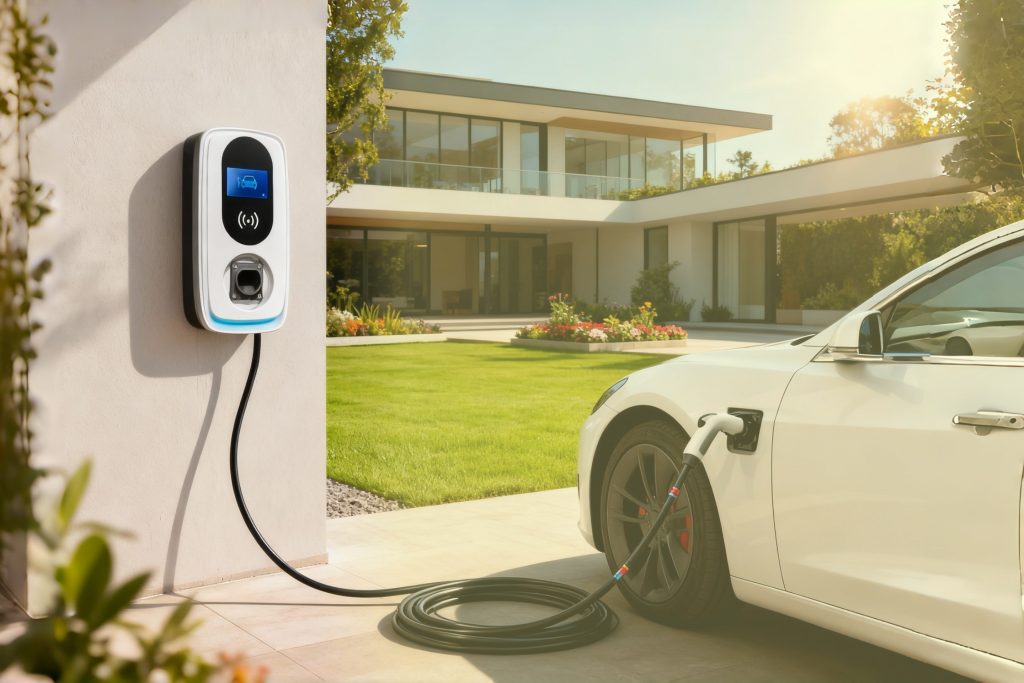
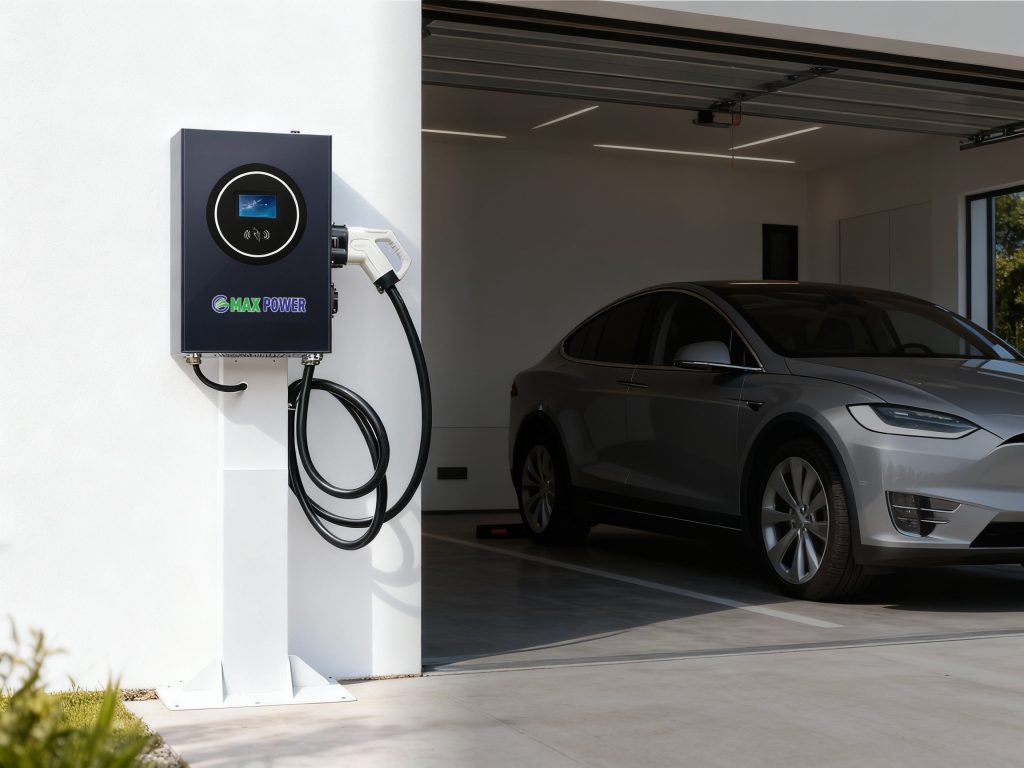
For businesses operating a business ev charging station—whether retail stores, office parks, or fleet depots—managing the power demand of multiple commercial car chargers is a critical challenge. When several commercial car charger units operate simultaneously, they can draw excessive power, triggering utility demand charges, overloading electrical systems, or even causing outages. Effective load management solves this by intelligently distributing power across commercial car chargers, ensuring reliable operation while minimizing energy costs. Guangzhou Max Power New Energy Technology Co., Ltd., a leader in charging station management software (which leverages big data and intelligent scheduling to optimize power usage and safety), understands that wholesalers and their clients (business owners, charging network operators) need load management solutions that balance efficiency, reliability, and cost-effectiveness. While Max Power’s core expertise lies in software that monitors real-time charging parameters (power, current, voltage) and enables remote control—key to dynamic load adjustment—it also recognizes that integrating this software with well-designed commercial car chargers is essential for seamless load management. This article outlines the core principles, benefits, and best practices of load management for multiple commercial car chargers, helping wholesalers source solutions that meet the unique needs of business ev charging station operators.

Core Principles of Load Management for Commercial Car Chargers
- Dynamic Power Allocation to Avoid Overloads: The foundation of load management is dynamic power distribution—adjusting the power supplied to each commercial car charger based on real-time demand. For example, if a business ev charging station has 4 commercial car chargers and a maximum allowable power draw of 100kW, the load management system will allocate power so that the total never exceeds 100kW. If 2 chargers are in use, each might get 50kW; if a third charger is plugged in, the system could reduce each to ~33kW to stay within the limit. This prevents overloading the site’s electrical infrastructure and avoids costly utility penalties for exceeding demand thresholds. Wholesalers should note that dynamic allocation doesn’t sacrifice charging speed unnecessarily—most systems prioritize chargers with higher urgency (e.g., an EV with 10% battery) by allocating more power to them, ensuring user satisfaction.
- Demand Response Integration to Cut Energy Costs: Load management systems can also integrate with utility demand response programs, which reward businesses for reducing power use during peak hours (e.g., 4-8 PM when electricity prices are highest). During these periods, the system can temporarily reduce power to commercial car chargers (with user notifications) or shift charging to off-peak times (e.g., overnight) when rates are lower. For a business ev charging station operator, this can cut monthly energy bills by 15-30%—a significant savings, especially for sites with high charger usage. Guangzhou Max Power’s management software enhances this by analyzing historical charging data to predict peak demand periods, allowing the system to proactively adjust power allocation before rates spike.
Key Components of an Effective Load Management System for Business EV Charging Station
| Component | Function in Load Management | Wholesale Value for Clients |
|---|---|---|
| Intelligent Software Platform | Centralizes control of commercial car chargers; monitors real-time power use, sets load limits, and adjusts allocation dynamically. Integrates with utility data for demand response. | Enables seamless, automated load management; eliminates manual adjustments and reduces human error. |
| Smart Commercial Car Chargers | Communicate with the software platform to receive power allocation commands; adjust charging speed in real time. Equipped with metering to track individual charger power use. | Ensures chargers respond quickly to load changes; provides data for billing and usage analysis. |
| Electrical Monitoring Sensors | Track the total power draw of the business ev charging station; send alerts if approaching load limits. Compatible with existing electrical panels (no major rewiring needed). | Adds an extra layer of safety; prevents unexpected overloads even if chargers or software malfunction. |
| User Notification Tools | Inform EV drivers of power adjustments (e.g., “Charging speed reduced to avoid overload—estimated completion time extended by 15 mins”). Delivered via app, email, or charger touchscreens. | Improves user experience; reduces frustration by setting clear expectations about charging times. |
Benefits of Load Management for Business EV Charging Station Operators
- Reduced Energy and Utility Costs: The most immediate benefit of load management is lower energy expenses. By avoiding demand charges (one-time fees for exceeding peak power limits) and leveraging off-peak rates, business ev charging station operators can save thousands of dollars annually. For example, a retail store with 6 commercial car chargers might face a $1,000+ demand charge if chargers draw 150kW during peak hours; load management could cap usage at 100kW, eliminating this fee. Additionally, by optimizing power allocation, the system reduces energy waste—ensuring no commercial car charger uses more power than necessary. Wholesalers can highlight this cost-saving potential to business clients, who often prioritize ROI when investing in charging infrastructure.
- Enhanced Reliability and Safety: Overloaded electrical systems are a major safety risk—they can cause overheating, electrical fires, or equipment damage. Load management prevents this by keeping total power draw within the site’s electrical capacity, protecting both the commercial car chargers and the business’s main electrical system. For example, a hotel with a business ev charging station in its parking garage won’t have to worry about chargers tripping the main circuit breaker and shutting down guest rooms. Guangzhou Max Power’s software adds an extra layer of safety by sending real-time alerts for unusual power spikes or charger malfunctions, allowing operators to address issues before they escalate.
Commercial Car Chargers FAQS
Q1: Can Load Management Be Retrofitted to Existing Commercial Car Chargers?
A1: Yes—most existing commercial car charger units can be integrated with load management systems, provided they have internet connectivity and support open communication protocols (e.g., OCPP 1.6/2.0). Guangzhou Max Power’s management software is compatible with 90%+ of commercial car chargers on the market, requiring only a software update or the addition of a small communication module (if the charger lacks built-in connectivity). Retrofitting is often more cost-effective than replacing existing chargers, making it a popular option for business ev charging station operators looking to add load management without a full infrastructure overhaul. Wholesalers can offer retrofitting kits and support to clients with existing chargers.
Q2: Does Load Management Slow Down Charging for All Commercial Car Charger Users?
A2: No—load management only adjusts charging speed when total power demand approaches or exceeds the site’s limit. When usage is low (e.g., early morning), commercial car charger users will still get full fast-charging speed (e.g., 50kW per charger). Even during peak times, the system prioritizes users with urgent needs (e.g., low battery), so they may experience minimal slowdown, while users with higher battery levels get a larger reduction. For example, an EV with 80% battery might be limited to 20kW, while one with 15% battery gets 40kW—ensuring the urgent user charges quickly. Wholesalers can reassure clients that load management preserves user satisfaction by being intelligent, not one-size-fits-all.
Q3: How Much Does a Load Management System for Commercial Car Chargers Cost?
A3: The cost of a load management system varies based on the number of commercial car chargers and features, but most systems for small-to-medium business ev charging station (4-8 chargers) range from 3,000-8,000 (software + installation). This cost is typically recouped within 6-12 months through reduced energy and demand charges. For larger sites (10+ chargers), costs may be higher, but the savings scale proportionally. Guangzhou Max Power offers scalable pricing models, including subscription-based options, to make load management accessible for businesses of all sizes. Wholesalers can help clients calculate ROI by comparing system costs to estimated monthly savings on utility bills.
Q4: Is Load Management Required by Law for Business EV Charging Station?
A4: While load management isn’t universally required by law, many regions and utilities encourage or mandate it for sites with multiple commercial car chargers (e.g., 3+ units). For example, some U.S. states require load management to qualify for EV charging incentives or rebates, while European utilities may impose penalties on sites without it that exceed power limits. Even where not mandatory, load management is highly recommended to avoid safety risks and excessive costs. Wholesalers should advise clients to check local regulations and utility requirements, as compliance can also unlock financial incentives that offset system costs.
Q5: What Support Does Guangzhou Max Power Offer for Load Management Systems?
A5: Guangzhou Max Power provides end-to-end support for wholesalers and their clients: 1) Software integration—compatibility with all major commercial car chargers; real-time monitoring, dynamic load allocation, and demand response features; 2) Installation assistance—technical guides and on-site support to set up the system, including calibration with the site’s electrical capacity; 3) Training—virtual sessions for wholesalers’ sales teams and business ev charging station operators on system use and troubleshooting; 4) Post-sales support—24/7 technical help, software updates, and data analysis tools to optimize load management over time. To explore our load management solutions for commercial car chargers and wholesale partnership opportunities, visit our company webpage today!