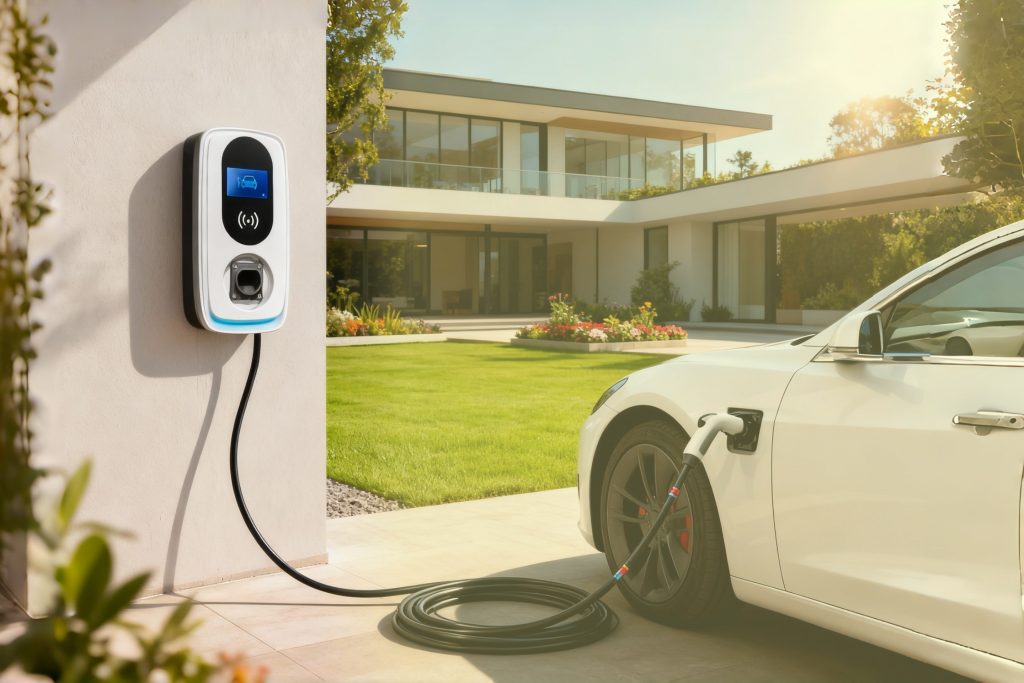
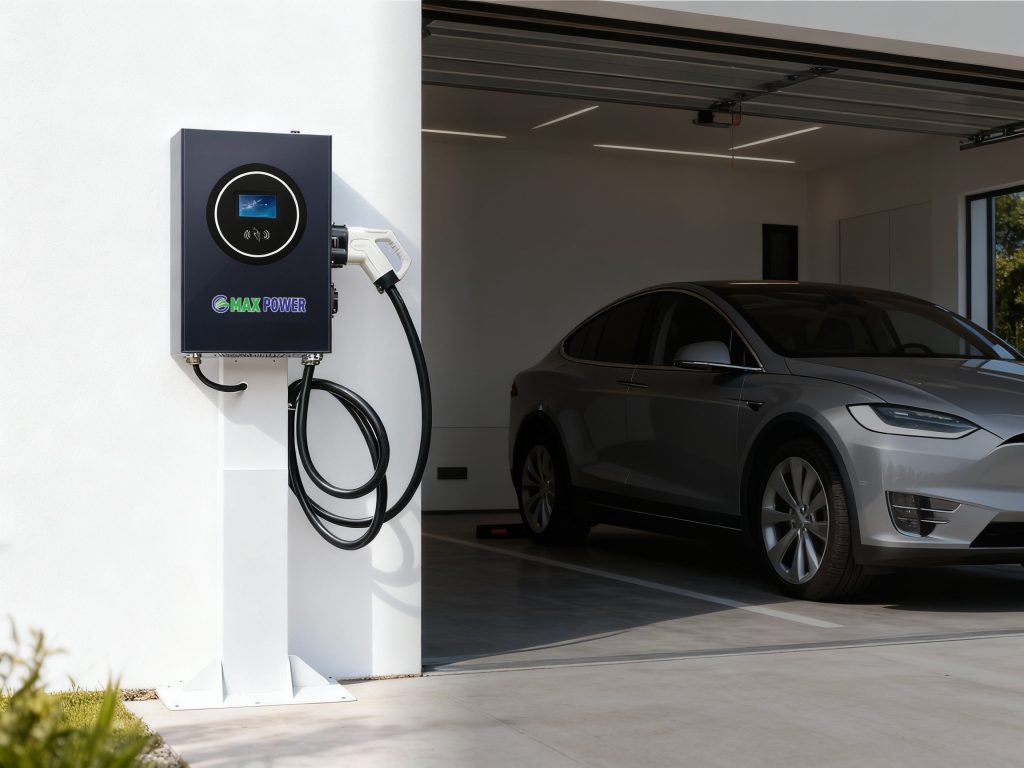
Business EV charging station—including scalable commercial charging station setups and tailored business electric car charger models—has become a must-have for modern enterprises, from retail stores and office parks to fleet depots. These stations go beyond basic charging, integrating smart management, high durability, and user-centric design to meet business needs: attracting EV-driving customers, reducing fleet downtime, and aligning with sustainability goals. For wholesalers serving businesses of all sizes, partnering with a manufacturer that delivers reliable, business-focused charging solutions is critical. Guangzhou Max Power New Energy Technology Co., Ltd., a leading EV charger manufacturer founded in 2017 (with a 4,000㎡ production base and expertise in power conversion), supports this demand with their SC Series business electric car charger—featuring patented airflow isolation, 95% efficiency, and ultra-slim profiles (545×380×170mm to 721×475×232mm). Their focus on industrial-grade resilience ensures commercial charging station setups can handle high traffic and harsh conditions, making them a trusted bulk partner for wholesalers globally.

Smart Fleet and User Management for Business EV Charging Station
- Multi-User Access Control for Commercial Charging Station: Commercial charging station for businesses (e.g., shopping malls or office parks) needs flexible access control to manage who uses the chargers—whether it’s customers, employees, or fleet vehicles. Max Power’s business electric car charger integrates with smart payment and access systems: customers can start charging via a QR code (linked to their phone or payment app), while employees use RFID cards for free or discounted charging. For example, a retail commercial charging station can offer 30 minutes of free charging to customers who spend over $50(for AC charger), driving foot traffic and loyalty. The system also tracks usage data (e.g., which charger is used most, peak hours) via a cloud dashboard, helping businesses optimize charger placement and pricing.
- Fleet Charging Scheduling for Business Electric Car Charger: For fleet-based businesses (e.g., delivery companies or taxi services), business electric car charger with scheduling capabilities is a game-changer. Max Power’s system lets fleet managers pre-book charging slots for vehicles—ensuring a delivery van is fully charged by 6 AM without waiting in line. The business EV charging station also prioritizes high-priority vehicles (e.g., a van with an urgent delivery) by adjusting charging speed for other units. For instance, a fleet commercial charging station with 5 SC Series chargers can charge 3 vans at full 40KW speed and 2 at 10KW, ensuring the urgent vans are ready on time. This reduces fleet downtime by 40% vs. unmanaged charging, a key selling point for wholesalers targeting logistics or service businesses.
Scalability and Space Efficiency for Commercial Charging Station
- Modular Design for Business EV Charging Station: Business EV charging station must grow with a company’s needs—modular design lets businesses start small (2–3 chargers) and add more as EV adoption increases. Max Power’s commercial charging station uses a modular setup: each SC Series business electric car charger connects to a shared power cabinet, so adding a new charger doesn’t require rewiring the entire system. For example, a small office can start with 2×7KW chargers and upgrade to 5×22KW chargers as more employees drive EVs—no costly infrastructure overhauls. This scalability is ideal for wholesalers: they can sell starter kits to small businesses and expand with larger orders as clients grow, building long-term relationships.
- Ultra-Slim Profile for Space-Constrained Commercial Charging Station: Many businesses (e.g., urban cafes or small retail stores) have limited parking space—business electric car charger with a compact design is essential. Max Power’s SC Series business electric car charger features ultra-slim dimensions (545×380×170mm for low-power models) that fit in tight spots, like narrow parking bays or wall-mounted areas. For example, a coffee shop with 4 parking spots can install 2 wall-mounted SC chargers without losing a parking space, making the most of limited real estate. The slim design also reduces shipping and installation costs: wholesalers can transport more chargers per shipment, and businesses save on labor for complex installations.
High Durability and Efficiency for Business Electric Car Charger
| Feature | Key Benefit for Business EV Charging Station | Ideal Business Use Case | Max Power SC Series Advantage | Wholesaler Value |
|---|---|---|---|---|
| Patented Airflow Isolation | Prevents overheating; 95% efficiency | High-traffic sites (retail, fleet depots) | Maintains performance in 24/7 use; reduces downtime | Caters to busy commercial operations |
| Industrial-Grade Casing | Resists dust, rain, and impacts | Outdoor stations (parking lots, gas stations) | IP54 rating; -25°C to +50°C operating range | Fits all weather conditions |
| >99% Power Factor | Reduces electricity costs | Large offices, fleet depots (high usage) | Lowers energy waste; saves $1000+ annually per site | Appeals to cost-conscious businesses |
| 7-40KW Power Range | Matches diverse EV needs (cars, vans, trucks) | Mixed-use sites (retail + fleet) | One charger fits all vehicles; no inventory splits | Simplifies bulk ordering |
Safety and Compliance for Commercial Charging Station
- Comprehensive Safety Protections for Business EV Charging Station: Commercial charging station must meet strict safety standards to protect users, vehicles, and business property. Max Power’s business electric car charger includes multiple safeguards: overcurrent/overvoltage protection (prevents damage to EV batteries), ground fault circuit interrupters (GFCI, shuts down in 0.1s if leaks occur), and temperature monitoring (halts charging if components overheat). For example, a business EV charging station in a school parking lot can safely operate around children and staff, with no risk of electrical hazards. The chargers also comply with global standards (e.g., IEC 61851 for EV charging), ensuring businesses avoid fines or liability issues.
- Remote Diagnostics for Proactive Maintenance: Downtime in a commercial charging station costs businesses money (e.g., lost customers or fleet delays)—remote diagnostics minimize this risk. Max Power’s business electric car charger connects to a cloud platform that alerts businesses (and wholesalers’ support teams) to potential issues: a faulty cable, declining efficiency, or software glitches. For instance, if a charger’s power factor drops below 98%, the system sends a notification, allowing a technician to fix it before it fails. This proactive maintenance reduces downtime by 60% vs. traditional chargers, ensuring business EV charging station remains operational when businesses need it most.
Business EV Charging Station FAQS
Q1: Can a Commercial Charging Station Be Customized with a Business’s Branding?
A1: Yes—Max Power offers customization options for commercial charging station models, including branded decals, color matching (to a business’s logo), and custom QR codes (linking to the business’s app or website). For example, a hotel business EV charging station can have the hotel’s logo printed on the SC Series chargers, reinforcing brand identity.
Q2: How Much Does It Cost to Operate a Business EV Charging Station?
A2:Operating costs depend on usage and power rates, but Max Power’s business electric car charger minimizes expenses with 95% efficiency and >99% power factor. For a commercial charging station with 3×22KW chargers used 8 hours daily (average commercial rate of 0.15/kWh), monthly costs are ~234—far lower than the revenue or customer loyalty gains.
Q3: Is a Business EV Charging Station Compatible with All EV Models?
A3: Max Power’s business electric car charger works with all major EV models (e.g., Tesla, Ford, Volkswagen) via universal connectors (CCS, CHAdeMO, Type 2). The 7-40KW power range adapts to each EV’s maximum charging capacity— a small car uses 7KW, while a fleet van uses 40KW. This compatibility means businesses don’t need to buy multiple charger types, simplifying inventory for wholesalers and reducing costs for clients.
Q4: How Long Does It Take to Install a Commercial Charging Station?
A4: Installation time depends on size: a small business EV charging station (2×7KW chargers) takes 1–2 days for a licensed electrician to install, thanks to Max Power’s pre-wired design. A large commercial charging station (10+ chargers) takes 3–5 days, including electrical checks and cloud setup.
Q5: Do Business Electric Car Charger Require Regular Maintenance?
A5: Max Power’s business electric car charger requires minimal maintenance: monthly visual checks (for cable damage or debris) and annual software updates (done remotely via the cloud). The industrial-grade components and airflow isolation reduce wear, so most chargers need no major repairs for 5+ years. Wholesalers can offer maintenance packages (bundled with bulk orders) to provide clients with peace of mind, creating recurring revenue streams.