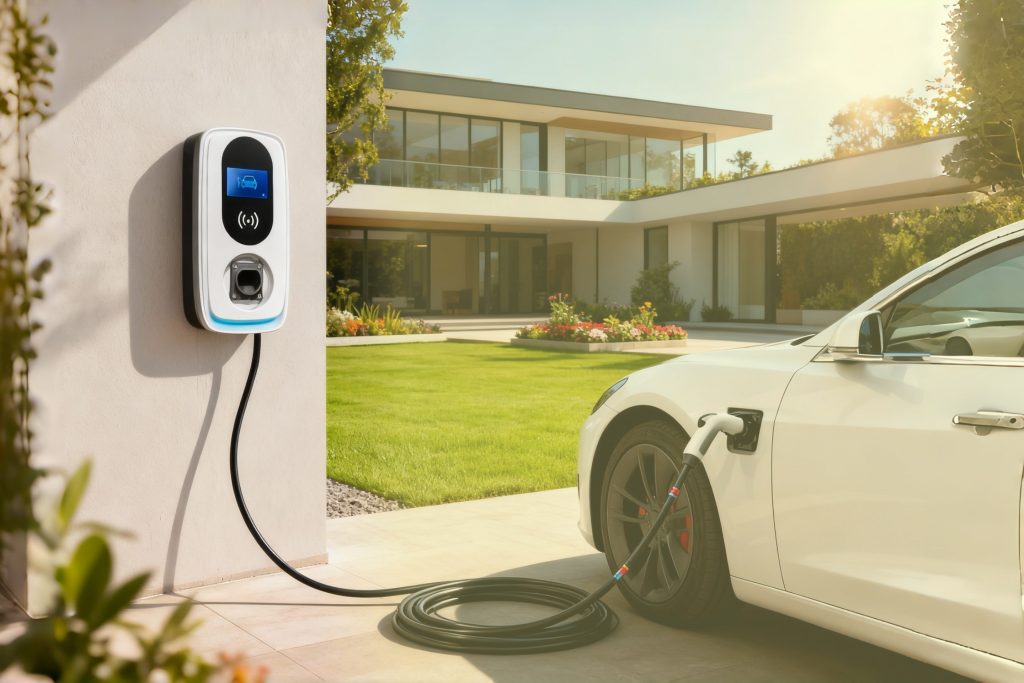
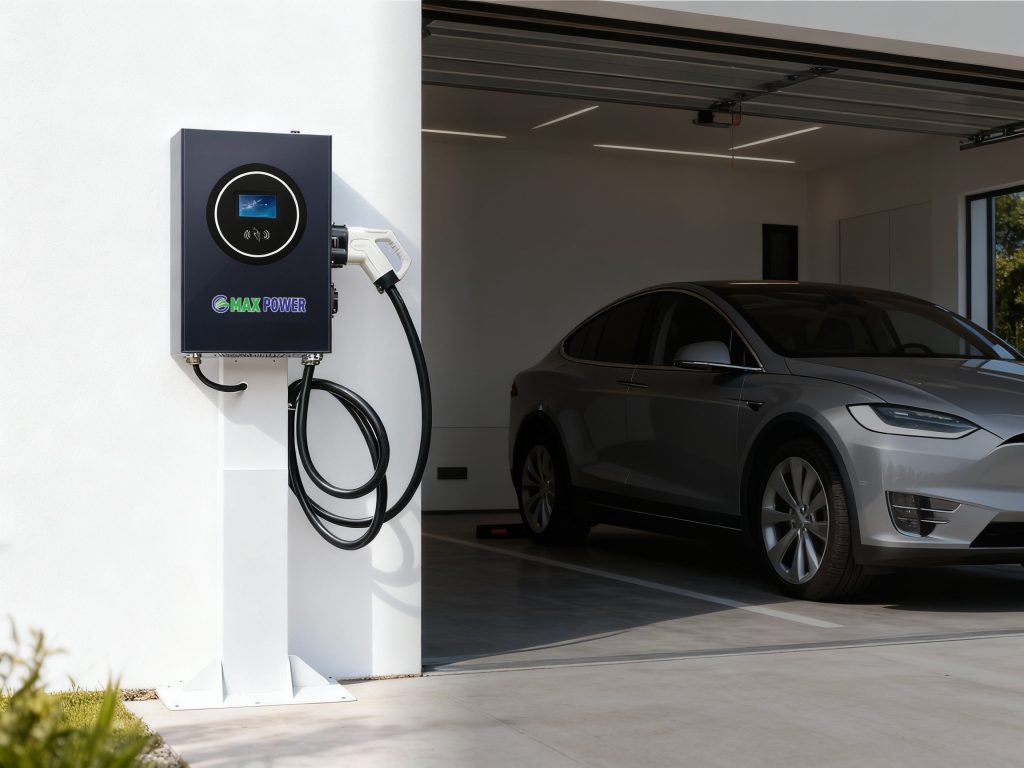
Household solar EV charging station is a residential-specific energy system that combines solar panel arrays with EV charging hardware, enabling houseowner to power their electric vehicles using clean, renewable solar energy. Unlike public charging stations that rely on the grid, this setup lets users generate, store, and use their own electricity, reducing dependence on fossil fuels and lowering long-term energy costs. Household solar EV charging station typically includes solar panels, a battery storage unit (for energy reserve), an EV charger (usually Level 2, 240V), and a charge controller to manage power flow between the solar system and the vehicle. This integration not only supports sustainable EV ownership but also provides backup power for essential home devices during grid outages, aligning with the need for reliable energy solutions in various scenarios.

Household solar EV charging station is designed to adapt to different residential layouts and EV models, making it a flexible choice for most houseowners
Whether installed on rooftops, ground-mounted in yards, or even as portable setups for small house, the solar panels can be sized to match daily EV charging needs—ranging from 4 to 8 panels for average commuters who drive 20-30 miles per day. This system is seamlessly compatible with all electric vehicle brands, and as it supports standard charging protocols compatible with most electric vehicles (such as J1772 for level 2 charging). Additionally, Household solar EV charging station can be paired with smart home systems, allowing users to monitor solar energy production, charging progress, and battery storage levels via a mobile app, ensuring efficient energy use throughout the day.
Household solar electric vehicle charging stations further enhance the core functions of standard solar charging stations by optimizing the specific power demands of electric vehicles.
Unlike basic solar setups that prioritize home appliance use, this system allocates power to the EV charger first during peak solar production hours (typically 10 AM to 4 PM), ensuring the vehicle gets the maximum amount of renewable energy. If solar production exceeds charging needs, the excess energy is stored in the battery unit for evening charging or grid outages; if production is low (e.g., on cloudy days), the system can draw supplementary power from the grid to avoid charging delays. Household solar EV charging station also often includes features like scheduled charging, letting users set charging times to align with peak solar output, further maximizing cost savings and sustainability.
Household solar EV charging station emphasize user-friendly installation and maintenance, making them accessible to houseowners without advanced technical knowledge
Most systems are plug-and-play, with professional installers connecting the solar panels to the charger and battery – a process that usually takes 1 to 3 days, depending on the existing electrical setup in the home. Minimum maintenance requirements: Solar panels need to be cleaned occasionally (2-4 times a year) to remove dust and debris, while chargers and battery cells have a lifespan of 10-15 years and do not require regular maintenance. Household solar EV charging station also feature weather-resistant designs (typically IP54 or higher), protecting components from rain, snow and extreme weather.
Compared with pure electric vehicle charging, solar charging stations for electric vehicles have significant long-term cost-effectiveness
While the upfront cost includes solar panels, a battery, and the charger, homeowners can recoup this investment within 5-7 years through reduced or eliminated electricity bills for EV charging. On average, charging an EV via grid power costs 0.15-0.30 per kWh, while solar power is essentially free once the system is paid off. Additionally, many regions offer tax incentives, rebates, or net metering programs that let houseowners sell excess solar energy back to the grid, further offsetting the initial expense of solar charging stations for electric vehicles.
Solar EV Charging Station Cost varies based on system size, components, and installation complexity, but it generally falls within a predictable range for residential use
A basic setup (4 solar panels, a 5kWh battery, and a Level 2 charger) typically costs \(8,000-\)12,000 before incentives; a larger system can range from 20,000. The charger itself accounts for 2,000 of the cost, while solar panels and batteries make up the majority. As mentioned earlier, incentives can reduce this cost by 20%-30% in many areas, making Solar EV Charging Station Cost more manageable for homeowners. It’s also important to note that these costs have decreased by 30%-40% over the past decade, thanks to advancements in solar and battery technology, making home solar EV charging more accessible than ever.
In summary, Household solar charging station is a sustainable, cost-effective solution for homeowners with electric vehicles, offering the dual benefits of clean energy use and energy independence. From the flexibility of Household solar EV charging station to the user-friendly design of Household solar EV charging station , these systems cater to diverse residential needs while reducing reliance on the grid. Solar Power Charging Station for Electric Cars further enhances long-term savings, and while Solar EV Charging Station Cost requires an upfront investment, incentives and reduced energy bills make it a financially viable choice over time. As more homeowners adopt EVs and prioritize sustainability, Solar Charging Station for Home will continue to be a key component of modern, eco-friendly residential energy systems, providing reliable, renewable power for both vehicles and homes.
Solar Charging Station For Home FAQs
What are the key features of a Household solar charging station ?
A: This Household solar charging station delivers 20kW of rapid charging capability, making it a powerful emergency power partner. It is designed for use in diverse scenarios, from disaster area like earthquakes and wars to remote operations. Key features include smart grid integration, direct PV access for solar panels, and peak shaving technology to ensure stable power supply. With IP54 weather protection and support for OCPP2.0, it enables efficient and reliable energy management for any home.
How does a Household solar charging station provide power during emergencies?
A: Acting as your ultimate emergency power partner, the solar charging station for home provides 20kW of rapid charging anywhere. It is built to function reliably in disaster zones such as those affected by earthquakes or wars, as well as during remote operations where grid power is unavailable. Its ability to integrate with solar panels via PV direct access and its robust IP54 protection ensure a continuous and stable power source when it is needed most.
What makes the Household solar charging station suitable for off-grid locations?
A: The solar charging station for home is an ideal solution for off-grid locations and remote operations. It delivers 20kW of rapid charging power independently of the main grid. With PV direct access, it can efficiently harness energy from solar panels, while its peak shaving function maintains a stable power output. The unit’s IP54 rating guarantees durability against the elements, making this emergency power partner ready for challenging environments.
How does the smart technology in a Household solar charging station work?
A: The smart technology in a solar charging station for home includes smart grid integration and OCPP2.0 support for advanced energy management. This allows the unit to perform peak shaving, balancing energy loads to provide stable power. As an ultimate emergency power partner, it can seamlessly draw power from solar panels via PV direct access and deliver 20kW rapid charging, ensuring efficient operation for your home during both normal and emergency situations.
Why is the Household solar charging station a reliable emergency power partner?
A: This Household solar charging station is a reliable emergency power partner because it delivers 20kW rapid charging anywhere, from disaster zones like earthquakes and wars to remote operations. Its robust construction features IP54 protection against dust and water, and it supports OCPP2.0 for smart, efficient energy management. With additional features like PV direct access and peak shaving for stable power, it ensures you have access to electricity when traditional sources fail.