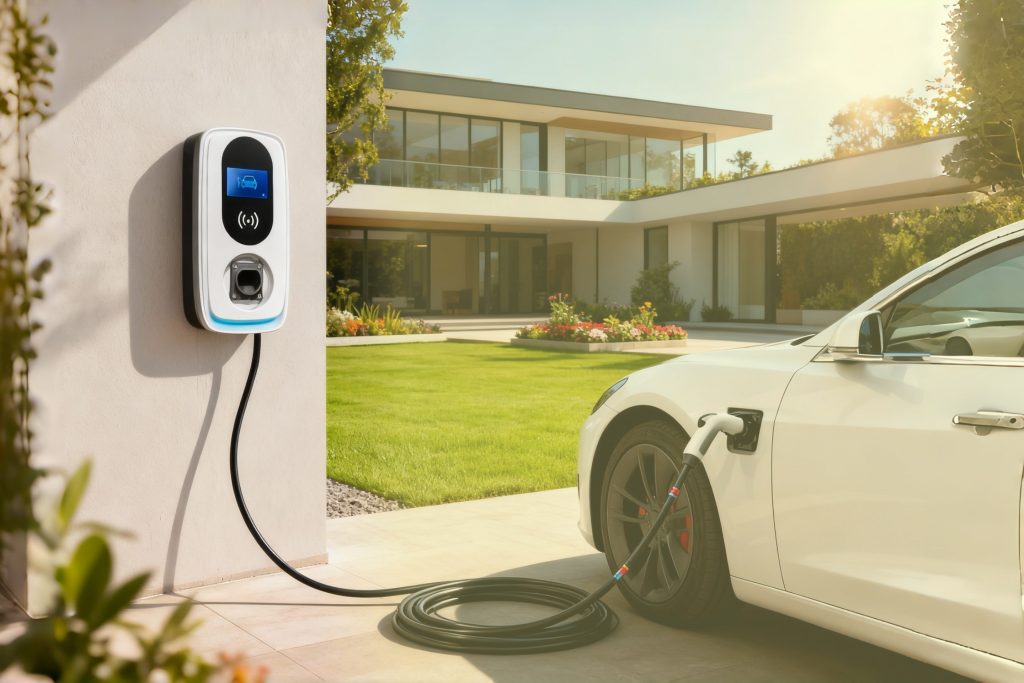
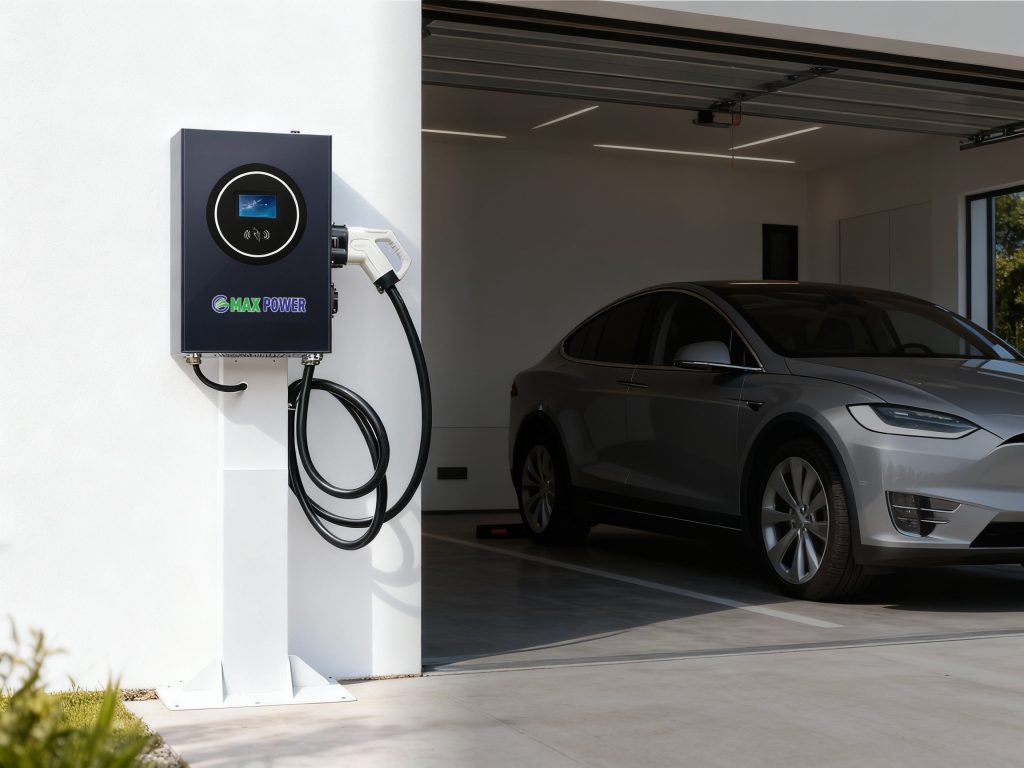
Commercial Charging Stations has become an indispensable infrastructure for modern businesses, bridging the gap between the growing demand for electric vehicle (EV) charging and the need to attract eco-conscious customers. Unlike residential chargers designed for personal use, a Commercial Charging Stations is engineered to handle high traffic, support multiple EV models simultaneously, and integrate seamlessly with business operations—whether installed at shopping centers, office parks, hotels, or retail outlets. These stations are built to balance efficiency and accessibility, ensuring that EV drivers can recharge their vehicles while engaging with business services, and that business owners can offer a value-added amenity without compromising on operational reliability.

Commercial Charging Stations often comes equipped with user-friendly features that enhance the charging experience for both customers and business operators
The 7-inch touchscreen and RFID reader enables OCPP/plug-and-play activation, while IK10 impact protection ensures durability—critical for high-traffic areas where accidental bumps or harsh use are common. Critical specs include wide voltage output, 2000 meters altitude operation, and compliance with GB/T/EN61851/CHAdeMO standards, ensuring compatibility with nearly all EV models on the market, from compact electric cars to large electric SUVs. Backed by TÜV certification, it integrates 4G/Ethernet connectivity, POS compatibility, and contactless payment—making it ideal for space-constrained urban stations where quick, hassle-free transactions are essential for keeping customer flow smooth.
Business Electric Car Charger, a key component of many Commercial Charging Stationss, is tailored to meet the unique needs of commercial settings
Unlike consumer-grade chargers, a Business Electric Car Charger prioritizes long-term durability and high-volume usage, with components rated for continuous operation throughout the day. Many models offer flexible power output options, ranging from 11kW for slower, extended charging (such as during a full workday at an office park) to 150kW for fast top-ups (ideal for shopping malls where customers stay for 1-2 hours). This flexibility allows businesses to choose the right charging speed based on their customer’s typical stay duration, ensuring that the charger adds value without causing unnecessary wait times.
Business EV Charging Station, another vital part of the commercial EV infrastructure, focuses on scalability to adapt to growing demand
A well-designed Business EV Charging Station can start with 2-4 charging ports and expand to 10 or more as EV adoption increases, without requiring major overhauls to the existing electrical system. This scalability is supported by dynamic load balancing (DLB) technology, which distributes power evenly across all active chargers to prevent electrical overloads—a crucial feature for businesses with limited electrical capacity. Additionally, Business EV Charging Stations often include remote monitoring tools, allowing operators to track usage, detect issues in real time, and schedule maintenance outside of peak business hours.
Commercial Car Charger, whether standalone or part of a larger Commercial Charging Stations, emphasizes compatibility and safety to build trust with EV drivers
These chargers are tested to meet international safety standards, including protection against overcurrent, short circuits, and extreme weather conditions (with IP54 or higher ratings for dust and water resistance). Many Commercial Car Charger models also support multiple charging protocols, such as CCS, Type 2, and CHAdeMO, ensuring that drivers of different EV brands can use the same station. This inclusivity is key for businesses looking to cater to a broad customer base, as it eliminates the frustration of incompatible charging ports.
Commercial Car Chargers, when deployed as part of a network, create a seamless charging experience that encourages repeat business
For example, a restaurant with two Commercial Car Chargers can attract EV drivers who might choose to dine there specifically to recharge, extending their stay and increasing their spending. Similarly, a hotel with a row of Commercial Car Chargers can differentiate itself from competitors, appealing to travelers who want to wake up to a fully charged vehicle. These chargers also support contactless payment options, such as credit cards or mobile wallets, making the charging process quick and convenient—critical for customers who are on the go.
In summary, Commercial Charging Stations, along with complementary Business Electric Car Charger, Business EV Charging Station, Commercial Car Charger, and Commercial Car Chargers, forms the backbone of a business-friendly EV infrastructure. These solutions are designed to meet the dual needs of EV drivers (reliable, accessible charging) and businesses (attracting customers, operational efficiency), with features like durable construction, flexible power output, scalability, and universal compatibility. As EV adoption continues to rise, Commercial Charging Stations will remain a key investment for businesses looking to stay competitive and support sustainable transportation. By integrating these chargers into their operations, businesses can not only meet customer demand but also contribute to a greener future, making them a win-win for both the economy and the environment.
Commercial Charging Stations FAQs
What are the key user interaction features of the Commercial Charging Stations?
A: The product is equipped with a responsive 7-inch touchscreen for easy operation and an integrated RFID reader for secure user identification. This combination supports flexible activation methods, including OCPP-compliant remote start and convenient plug-and-charge functionality.
How does the Commercial Charging Stations ensure durability in public environments?
A: It boasts an IK10 impact protection rating, making its components highly resistant to physical impacts and vandalism. This robust construction ensures reliable long-term operation in high-traffic public areas and various outdoor conditions.
What are the critical operational specifications for the Commercial Charging Stations?
A: Key technical specifications include a wide voltage output range for broad vehicle compatibility, certified operation at altitudes up to 2000 meters, and full compliance with major international standards including GB/T, EN61851, and CHAdeMO.
What certifications and connectivity options support the Commercial Charging Stations?
A: The station carries authoritative TÜV certification, validating its safety and performance. For constant connectivity, it offers dual 4G and Ethernet options, and it supports seamless integration with POS systems for streamlined transaction processing.
What makes the Commercial Charging Stations suitable for space-constrained urban installations?
A: Its design incorporates a space-efficient footprint without sacrificing functionality. It features contactless payment capabilities, reducing hardware complexity, and maintains all critical certifications, making it an ideal solution for dense urban areas where space is limited.