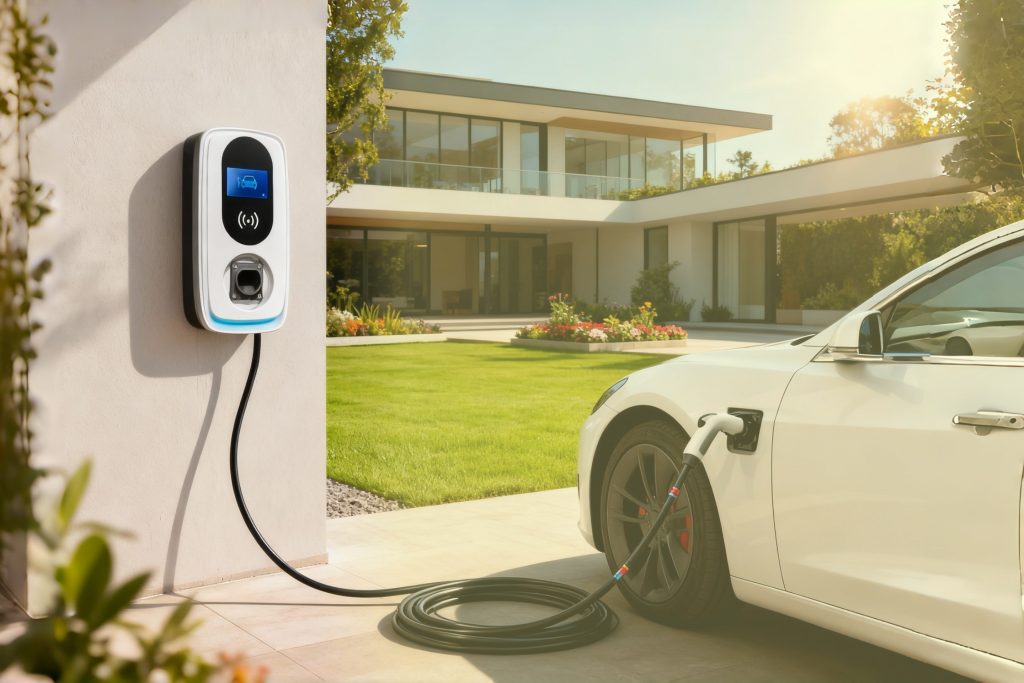
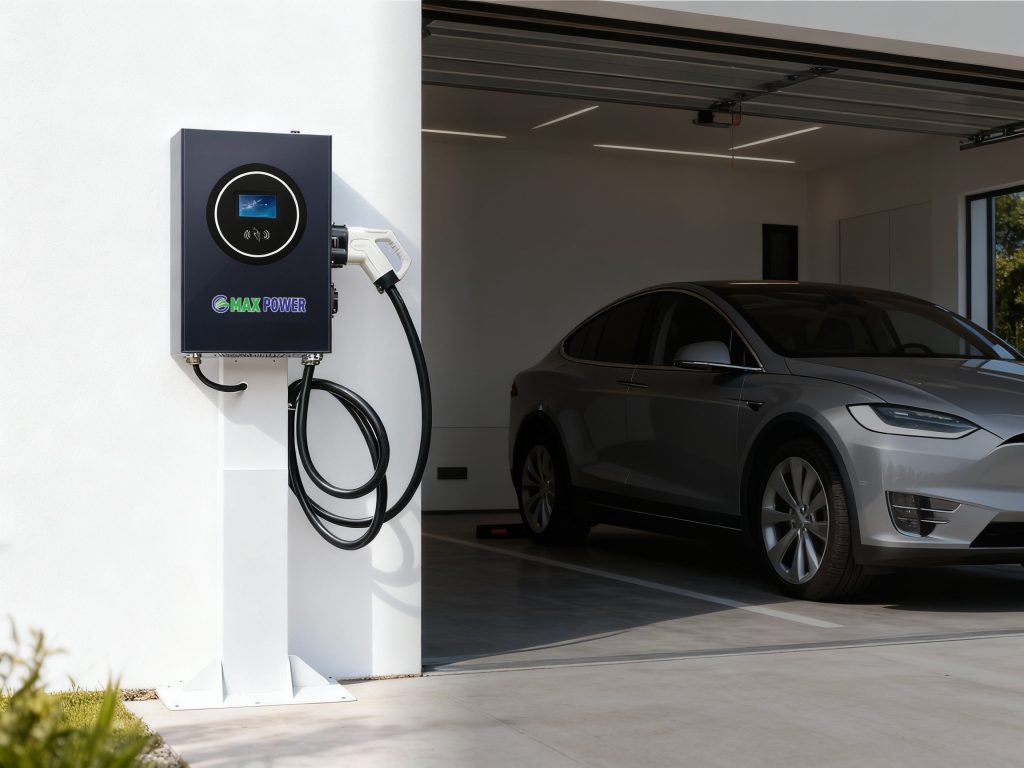
At Home EV Charger has become an essential accessory for modern electric vehicle (EV) owners, offering the convenience of recharging vehicles without relying on public charging stations. Designed to fit seamlessly into residential settings, most at home EV chargers are compact, easy to install, and compatible with a wide range of EV models. Unlike public chargers that often involve waiting times, an at home EV charger lets users top up their vehicle’s battery overnight or during idle hours, ensuring the car is ready for daily commutes or unexpected trips. Many at home EV chargers also come with smart features, such as app connectivity to monitor charging progress, schedule charging during off-peak electricity hours, and even track energy consumption—helping users save on utility bills while reducing their carbon footprint.

At Home EV Charger models vary in power output, but the majority are designed to balance efficiency and usability for household needs
Similar to the ACQ Series mentioned, some at home EV chargers offer multiple power tiers (such as 7KW, 11KW, and 22KW) within a compact chassis, making them suitable for different EV battery capacities and home electrical systems. A lightweight construction, often around 15kg, and durable casing (like IP54 rating) are common features, allowing the charger to withstand extreme environmental conditions—from high altitudes (up to 2000m) to temperature fluctuations ranging from -25°C to +50°C. These design elements ensure that an at home EV charger remains reliable year-round, whether installed in a garage, carport, or outdoor wall.
Charger Home setups are not just about convenience; they also prioritize safety and compatibility with residential electrical infrastructure
Before installing a charger home, it’s important to check the home’s electrical panel capacity to ensure it can support the charger’s power requirements—for example, a 22KW charger may need a 3-phase electrical supply, while a 7KW model works with a standard single-phase supply. Most charger home units come with built-in safety features, such as overcurrent protection, short-circuit prevention, and ground fault detection, to prevent electrical hazards. Additionally, charger home designs often include weather-resistant materials, which is crucial for outdoor installations, as they protect the device from rain, dust, and other external elements.
Charging an electric vehicle at home is significantly more cost-effective compared to using public charging stations, and it also offers greater flexibility in managing charging times
Public fast chargers may charge premium rates, especially during peak hours, but charging an electric vehicle at home allows users to take advantage of lower off-peak electricity tariffs. For instance, scheduling charging between midnight and 6 AM—when many utility companies offer reduced rates—can cut down on recharging costs by up to 50%. Moreover, charging an electric vehicle at home eliminates the need to drive to a public station, saving time and reducing additional mileage on the vehicle, which in turn extends the EV’s overall lifespan.
Charging station for cars at home is a long-term investment that adds value to both the home and the EV ownership experience
A well-installed charging station for cars at home can increase a property’s appeal to future buyers, especially as EV adoption continues to grow globally. Unlike temporary charging solutions (such as using a standard household outlet, which is slow and less efficient), a dedicated charging station for cars at home provides faster charging speeds—for example, a 7KW charger can add approximately 30km of range per hour, while an 11KW model can double that. This makes it easier for EV owners to maintain their vehicle’s battery health, as consistent, moderate-speed charging is less stressful on the battery than frequent fast charging at public stations.
Electric car charger for home models are evolving to meet the changing needs of EV owners, with a focus on smart technology and sustainability
Many modern electric car charger for home units can connect to home energy systems, such as solar panels, allowing users to charge their EV using renewable energy. This not only reduces reliance on the grid but also makes the charging process more eco-friendly. Additionally, electric car charger for home designs are becoming more compact and aesthetically pleasing, with slim profiles that blend into home exteriors or garages without being obtrusive. Some models also offer modular designs, making it easy to upgrade the charger’s power output if the user switches to a higher-capacity EV in the future.
In summary, At Home EV Charger is a game-changing solution for electric vehicle owners, combining convenience, cost-effectiveness, and safety in a single device. From the flexible power tiers and durable construction of models like the ACQ Series to the smart features that enhance usability, at home EV chargers address the key challenges of EV ownership. Charger home setups, when paired with strategic charging practices (like charging during off-peak hours), not only save money but also contribute to a more sustainable lifestyle. As EV technology advances, electric car charger for home models will continue to improve, offering even greater efficiency and integration with smart home systems—solidifying their role as an essential part of modern residential living for EV owners.
Charging An Electric Vehicle At Home FAQs
What are the key features of the ACQ Series when charging an electric vehicle at home?
A: The ACQ Series is designed for modern households, offering three power tiers—7KW, 11KW, and 22KW—within a compact, unified chassis. Its 15kg lightweight construction and IP54-rated casing ensure durability, capable of withstanding extreme altitudes up to 2000 meters and operating in temperatures from -25°C to +50°C.
How does the compact size of the ACQ Series benefit the process of charging an electric vehicle at home?
A: The unified 380×1360×320mm chassis of the ACQ Series makes it an ideal solution for charging an electric vehicle at home, as its space-saving design allows for flexible installation in garages or tight spaces without compromising on power, which is available in 7KW, 11KW, and 22KW tiers.
What environmental conditions can the ACQ Series endure while charging an electric vehicle at home?
A: When charging an electric vehicle at home with the ACQ Series, the unit is built to perform reliably thanks to its IP54-rated casing, which protects it against dust and water ingress, and its ability to operate in harsh conditions, including altitudes of 2000m and a temperature range of -25°C to +50°C.
Why is the lightweight design of the ACQ Series advantageous for charging an electric vehicle at home?
A: The 15kg lightweight construction of the ACQ Series simplifies the installation and potential repositioning of the unit at home, making the process of charging an electric vehicle at home more convenient, while still providing robust performance across its 7KW, 11KW, and 22KW power options in a compact form factor.
What power options are available with the ACQ Series for charging an electric vehicle at home?
A: For charging an electric vehicle at home, the ACQ Series offers three distinct power tiers—7KW, 11KW, and 22KW—to suit different household electrical setups and charging speed requirements, all housed within the same resilient and compact chassis designed to withstand challenging environmental conditions.