Challenge
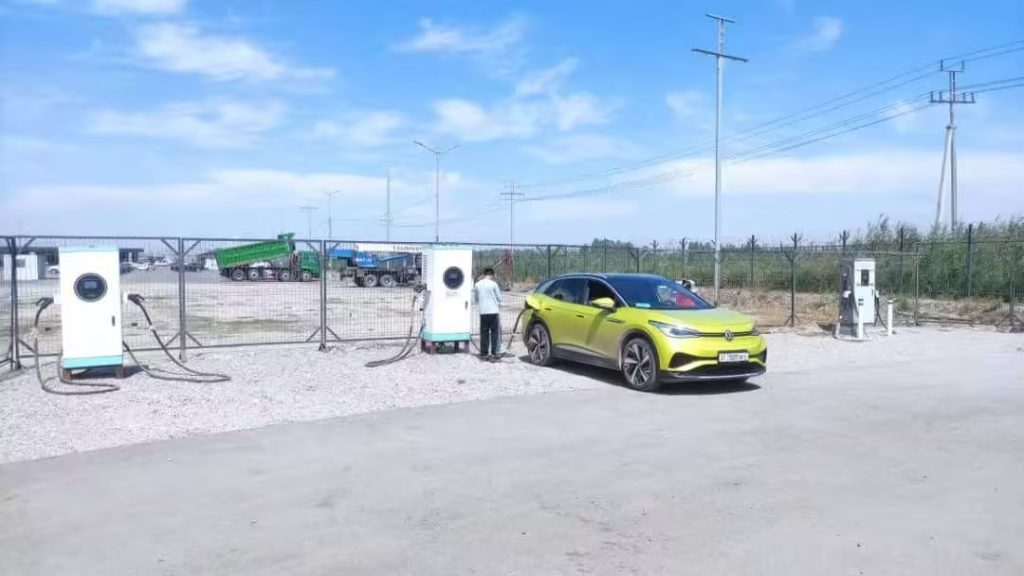
A commercial charging operator in Russia needed to deploy DC fast chargers in a region where winter temperatures routinely drop below -30°C. Standard charging stations derate or shut down in extreme cold to protect internal components — leaving EV drivers stranded and the operator with idle assets.
The requirements were clear:
- Full-power DC charging at -30°C and below — no derating.
- Dual-gun configuration to serve two vehicles simultaneously.
- Floor-mounted, rugged enclosure suitable for outdoor public parking.
- Remote monitoring so technicians are not dispatched for cold-start issues.
Max Power Solution
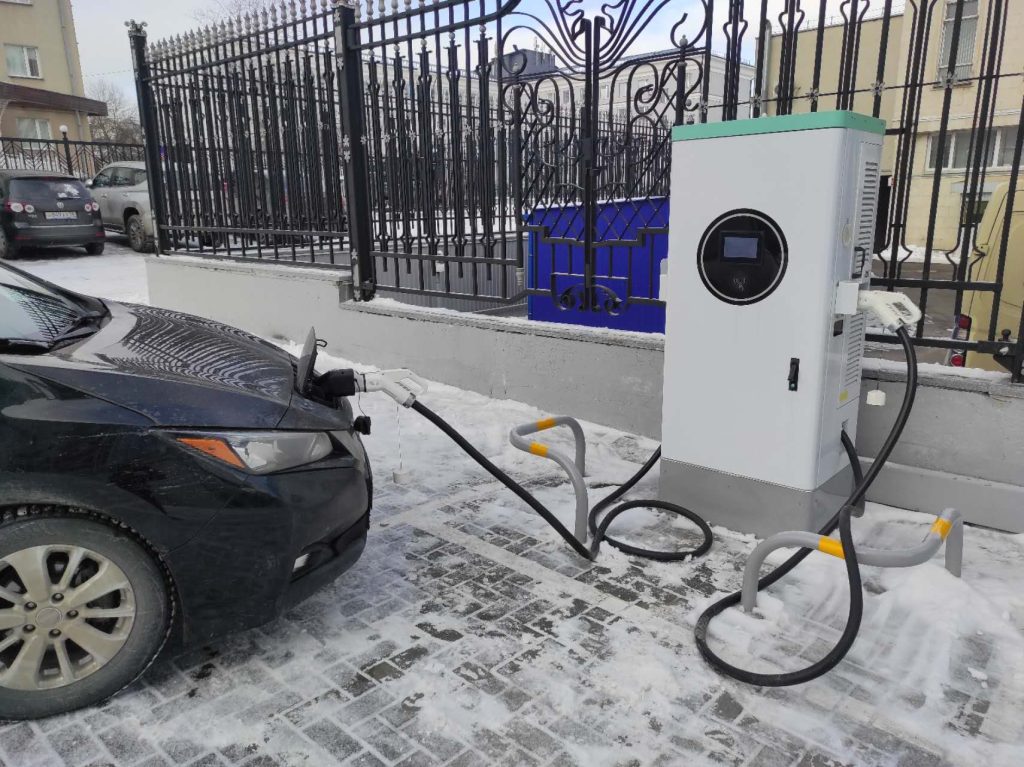
Floor-mounted dual-gun DC fast charger with integrated heating system
- Built-in heater unit — automatically activates when internal temperature drops below a preset threshold (typically 5°C). Warms power modules, battery management circuitry and cabinet interior to optimal operating range before startup and during operation.
- Dual-gun, up to 240kW total (120kW per gun) — two vehicles charge at once; power dynamically shared via OCPP load management.
- IP54 + IK10 enclosure — sealed against snow, ice and physical impact; corrosion-resistant coating for salted winter roads.
- Cold-weather rated cables — TPE jacket remains flexible at -40°C; no cable stiffness or cracking.
OCPP 1.6J / 2.0.1 — cloud CMS monitors temperature sensors in real time; operator receives alerts if heater cycles exceed normal duty. - Smart pre-conditioning — charger can be remotely woken via CMS to heat internal compartments before a scheduled vehicle arrival, eliminating cold-start delay.
Key innovation: The heater is not an aftermarket add-on — it is integrated into the charger’s thermal management loop, drawing power from the grid (not the vehicle) and controlled by the same PLC that manages power modules. This ensures the system reaches operating temperature before high-current DC conversion begins, preventing component stress and maintaining rated efficiency.
Results
- Zero cold-weather derating — chargers delivered full rated power continuously at -32°C during peak winter testing.
- 99.2% uptime across the harshest 3-month winter period; no heater-related failures.
- Driver confidence — EV owners in the region now reliably fast-charge even on -35°C mornings; average session time matched summer baselines.
- Remote cold-start — pre-conditioning via CMS reduced average “first charge of the day” delay from 12 minutes to under 90 seconds.
Takeaways for Cold-Climate Operators
- Heater integration matters — passive insulation is not enough; active heating of power electronics is required for sustained -30°C operation.
- Pre-conditioning via OCPP turns a cold start into a warm start, improving both driver experience and hardware longevity.
- Dual-gun with dynamic sharing maximizes throughput when vehicles are fewer in winter (drivers charge more often, but bays may be empty longer).
- Cable flexibility is a safety and usability issue — specify cold-rated TPE jackets for any deployment north of 50° latitude.
➡️ Explore the full commercial DC playbook: [Commercial Charging Station Playbook]
➡️ Compare protocols for remote management: [OCPP 1.6J vs 2.0.1 Buyer’s Guide]
Please leave to us and we will be in touch within 24hours.